
How Much Caffeine Is in Tea? A Guide to Green, Black, Herbal, and Chai Tea
Written by Alex McKenzie
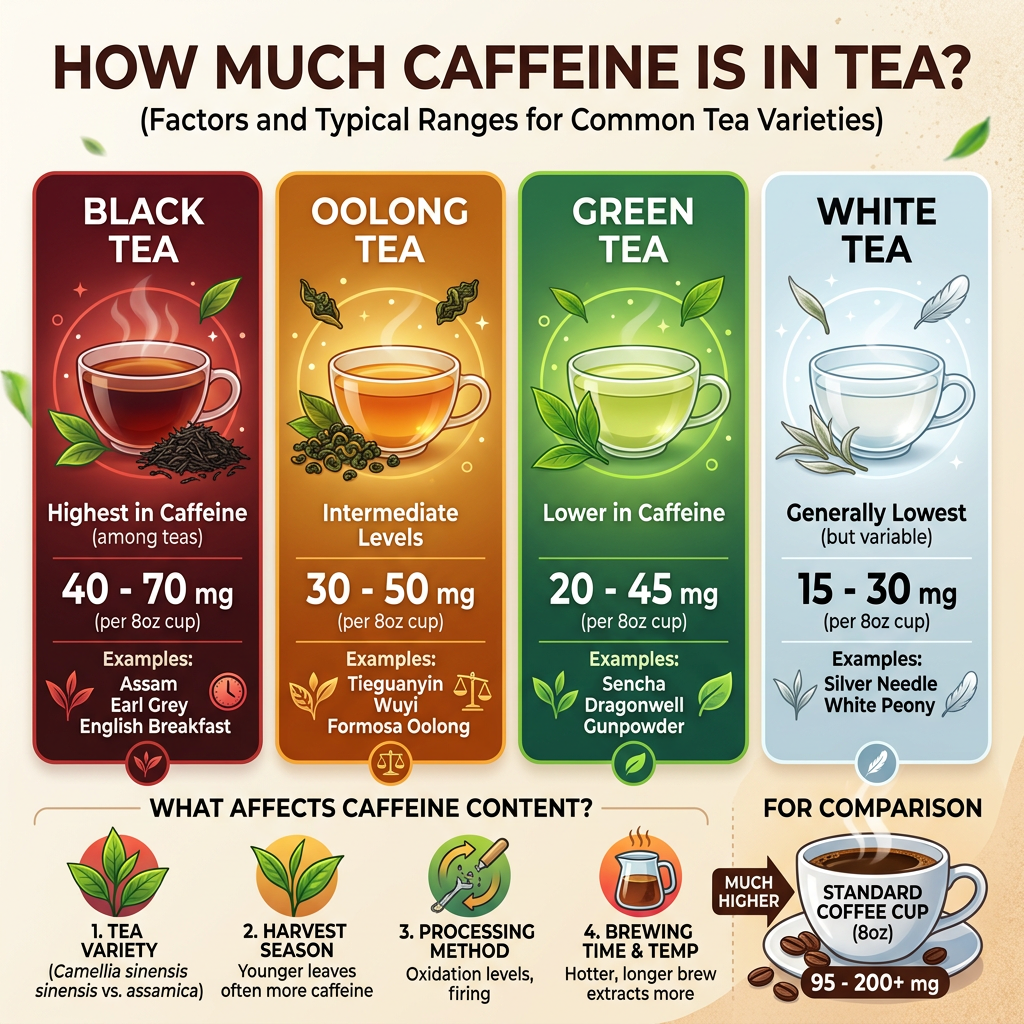
How Much Caffeine Is In Tea? Most brewed black tea is approximately 40 mg to 70 mg of caffeine per 8 oz cup. Brewed green tea averages from 20 to 45 mg of caffeine per 8 oz cup; brewed white tea has an average of 15 to 30 mg of caffeine per 8 oz cup. Herbal tea’s average is zero (0) caffeine content; however, if a herb tea blend includes an ingredient that also contains caffeine (such as green tea, black tea, yerba mate, or guarana), then it will have some level of caffeine content.
Related guides: Green Tea for Weight Loss, Herbal Tea for Weight Loss, and Can Tea Help With Weight Loss?.
The actual levels of caffeine contained within each brewed tea type depends on the specific type of tea being consumed, the amount served (per serving), how many tea leaves are used when brewed, how hot the water is during the brewing process, and how long the tea is allowed to brew for. More coffee is typically produced with larger servings and longer brewing times.
If you limit yourself to a certain amount of caffeine throughout your day and consume multiple cups of tea, then you could be exceeding that amount. Check the packaging for the caffeine content and/or look at “decaf” or “herbal” options. Most herbal teas are naturally caffeine-free. If you are looking for options that fit a weight-management routine, see our guide to the best caffeine-free teas for weight management.
Affiliate disclosure: This article may contain affiliate links. If you buy through one of these links, we may earn a commission at no extra cost to you.
Key takeaways
- An 8-ounce cup of black tea usually contains about 40 to 70 milligrams of caffeine.
- Green tea usually contains about 20 to 45 milligrams per 8-ounce cup.
- White tea often contains about 15 to 30 milligrams per cup.
- Most herbal teas do not contain caffeine, but some blends include caffeinated ingredients.
- Decaf tea still contains a small amount of caffeine.
- Coffee generally contains more caffeine than tea.
- Chai tea contains caffeine when it is made with black tea.
- Longer steeping and larger servings can increase the caffeine in tea.
- The FDA says up to 400 milligrams of caffeine per day is not generally linked with negative effects for most healthy adults.
- Pregnant people, children, people with heart conditions, and anyone sensitive to caffeine may need a lower amount.
How much caffeine is in tea?
The amount of caffeine in tea varies, but these average figures can help:
| Type of tea | Approximate caffeine per 8-ounce cup |
|---|---|
| Black tea | 40 to 70 mg |
| Green tea | 20 to 45 mg |
| White tea | 15 to 30 mg |
| Oolong tea | 30 to 50 mg |
| Chai tea | 25 to 50 mg |
| Herbal tea | 0 mg in most cases |
| Decaf tea | About 2 mg |
These figures are estimates. Actual caffeine levels vary by brand, tea variety, serving size, amount of tea used, water temperature, and steeping time.
These numbers are estimates, not fixed values. Two cups of the same tea can contain different amounts of caffeine.
The Harvard T.H. Chan School of Public Health lists about 47 milligrams of caffeine in black tea and about 28 milligrams in green tea. The Mayo Clinic caffeine chart lists similar amounts, including 48 milligrams for brewed black tea and 29 milligrams for brewed green tea per 8-ounce serving.
A larger mug can contain more caffeine simply because it contains more tea. A 16-ounce serving may contain about twice the caffeine of an 8-ounce serving if the tea is brewed at the same strength.
Caffeine in black tea
Black tea usually has more caffeine than green tea, although the difference is not always large.
Popular black teas include:
- English breakfast tea
- Earl Grey
- Irish breakfast tea
- Darjeeling
- Assam
- Ceylon
- Chai made with black tea
An 8-ounce cup often contains about 40 to 70 milligrams of caffeine. A strong cup brewed with more tea leaves or a longer steeping time may contain more.
Black tea is made from the leaves of Camellia sinensis. The leaves are processed in a way that gives the tea its darker color and stronger flavor. The processing method affects taste and appearance, but caffeine levels also depend on the specific leaves and brewing method.
If you are trying to reduce caffeine, use a shorter steeping time, choose a smaller serving, or switch to a decaffeinated or herbal tea.
Caffeine in green tea
Green tea usually contains less caffeine than black tea, but it is not caffeine-free.
An 8-ounce cup of brewed green tea often contains about 20 to 45 milligrams of caffeine. Some green teas may contain more or less depending on the variety and preparation.
Green tea products include:
- Sencha
- Jasmine green tea
- Gunpowder green tea
- Matcha
- Genmaicha
- Hojicha
Matcha can contain more caffeine than ordinary brewed green tea because you consume powdered tea leaves instead of drinking only an infusion. The amount depends on how much matcha powder is used.
Green tea is sometimes described as a lower-caffeine alternative to coffee. That can be true, but it is still important to count it as a caffeine source. Several cups of green tea can add up over the course of a day. Green tea is not caffeine-free, but it usually contains less caffeine than coffee. Learn more about green tea and weight loss.
How much caffeine is in white tea?
An 8-ounce cup of white tea will put you at roughly 15 to 30 milligrams of caffeine, though one should not expect that figure to be set in stone. The numbers can differ quite a bit.
While the beverage is produced from young leaves and buds, it is a common misconception that youth in the leaf equates to lower caffeine. In reality, there are other factors at play. How much of the tea is used, the water temperature, the length of the steep and the particular variety of the tea are all determinants of the final caffeine content.
Common white teas include:
- Silver Needle
- White Peony
- Shou Mei
White tea has a lighter flavor than most black teas. If you want a mild tea with less caffeine, it may be a good option, but it should not be treated as caffeine-free.
Does chai tea contain caffeine?
Yes,chai tea does contain caffeine, but only when brewed using a caffeinated base tea (which is typically black tea).
Traditionalchai, which is spiced tea with milk and sweeteners, usually incorporates black tea. Along with black tea, commonly included spices are cinnamon, cardamom, ginger, and cloves, all of which don’t typically possess significant amounts of caffeine. So the bulk of the caffeine comes from the black tea.
There are approximately 25-50mg of caffeine in an 8oz serving of chai tea. A standard coffee shop chai latte’s caffeine can vary widely from this value as it depends on: a prepared concentrate, powdered mixes, the brewing methods and sizes of serving.
Some types of chai tea don’t contain any actual tea leaves, and these caffeineless versions can utilize only spices or a non-caffeinatted base, like rooibos or other herbal ingredients. Be sure to carefully read the packaging or ask at a cafe to be certain of the chai base being used.
One particular variation called concentrate can also be problematic when calculating the amount of caffeine in chai as this comes in many varieties with various quantities of caffeine. Label or nutrition information is a safe bet in such instances.
How much caffeine is in a tea bag?
A standard tea bag does not have one fixed caffeine amount. It depends on the type of tea and the amount of tea inside the bag.
As a rough guide:
- A black tea bag may provide 40 to 70 milligrams of caffeine.
- A green tea bag may provide 20 to 45 milligrams.
- A white tea bag may provide 15 to 30 milligrams.
- A decaf tea bag may provide about 2 milligrams.
- An herbal tea bag usually provides no caffeine unless it includes a caffeinated ingredient.
Tea bags often contain smaller pieces of tea leaves. These pieces can release flavor and caffeine quickly. However, the final amount still depends on the product and brewing method.
Check the label if you need an exact figure. Some brands list caffeine content, while others only identify the type of tea.
What affects the caffeine level in tea?
Several factors can change how much caffeine reaches your cup.
Tea type
Black, green, white, and oolong tea all come from Camellia sinensis, so they naturally contain caffeine. Herbal teas are made from other plants and usually do not contain caffeine.
Amount of tea
Using two tea bags or more loose tea leaves usually produces a stronger drink with more caffeine.
Steeping time
A longer steeping time allows more compounds, including caffeine, to move from the leaves into the water. A shorter steep may produce a lighter drink with less caffeine.
Water temperature
Hotter water can extract compounds from tea more quickly. Green and white tea are often brewed with cooler water than black tea because high heat can make them taste bitter.
Serving size
A 16-ounce cup can contain about twice the caffeine of an 8-ounce cup if both are made with the same amount of tea per ounce.
Tea concentrates and powders
Ready-to-drink tea, chai concentrates, matcha, and powdered tea products can vary considerably. Always check the label if you are tracking caffeine.
Caffeine in tea vs. coffee
Coffee generally contains more caffeine than tea.
The Mayo Clinic lists about 96 milligrams of caffeine in an 8-ounce cup of brewed coffee. By comparison, it lists about 48 milligrams in brewed black tea and 29 milligrams in brewed green tea.
| Drink | Approximate caffeine per 8 ounces |
|---|---|
| Brewed coffee | 96 mg |
| Black tea | 48 mg |
| Green tea | 29 mg |
| Decaf coffee | 1 to 2 mg |
| Decaf black tea | About 2 mg |
These figures are averages. Coffee-shop drinks can contain much more caffeine because they may use multiple espresso shots or larger serving sizes.
So, does coffee have more caffeine than tea? Usually, yes. However, the difference depends on the product. A large, strong tea may contain more caffeine than a small, weak coffee.
Tea may still affect people who are sensitive to caffeine. Some people notice sleep problems, nervousness, a fast heartbeat, stomach discomfort, or headaches after smaller amounts.
Is caffeine-free tea really caffeine-free?
Most herbal teas are naturally caffeine-free because they are not made from traditional tea leaves. Common caffeine-free options include:
- Chamomile
- Peppermint
- Ginger
- Rooibos
- Hibiscus
- Lemon balm
- Fruit teas
However, not every herbal blend is caffeine-free. Some products contain green tea, black tea, yerba mate, guarana, or matcha. These ingredients can add caffeine.
The term “decaf” also does not mean zero caffeine. Decaffeinated tea has had most of its caffeine removed, but a small amount can remain.
If you need to avoid caffeine completely, read the ingredient list. Look for products that do not include Camellia sinensis, green tea, black tea, matcha, yerba mate, or guarana. Thought for 9 seconds
That is the point where readers are already thinking about buying:
- Herbal tea
- Decaf tea
- Rooibos
- Caffeine-free blends
- Tea bags for evening use

How much caffeine is safe?
The U.S. Food and Drug Administration says that up to 400 milligrams of caffeine per day is not generally associated with negative effects for most healthy adults.
That is a general guide, not a target. You may need less if you are sensitive to caffeine or if it affects your sleep, anxiety, digestion, or heart rate.
Remember to count caffeine from all sources, including:
- Tea
- Coffee
- Soda
- Energy drinks
- Chocolate
- Pre-workout products
- Some medicines and supplements
Pregnant people should discuss caffeine intake with a health care professional. The American College of Obstetricians and Gynecologists advises limiting caffeine to less than 200 milligrams per day during pregnancy.
The National Center for Complementary and Integrative Health also notes that brewed green tea is different from concentrated green tea extract supplements. Green tea extracts may contain much higher amounts of certain compounds than a normal cup of tea.
Can tea caffeine affect sleep?
Yes. Tea contains less caffeine than coffee in many cases, but it can still affect sleep.
The American Academy of Sleep Medicine discusses a study in which 400 milligrams of caffeine disrupted sleep even when people consumed it six hours before bedtime. The study used a high caffeine dose, so it does not show that one cup of tea will affect everyone in the same way. It does show that caffeine can remain relevant later in the day.
If caffeine affects your sleep, try these steps:
- Stop drinking caffeinated tea earlier in the day.
- Choose herbal tea in the evening.
- Use decaf tea when you want the taste of tea.
- Brew tea for less time.
- Choose a smaller serving.
- Check chai, matcha, and bottled tea labels.
Your personal response matters. Some people can drink green tea at dinner without a problem. Others may notice that even a small amount of caffeine makes it harder to fall asleep.
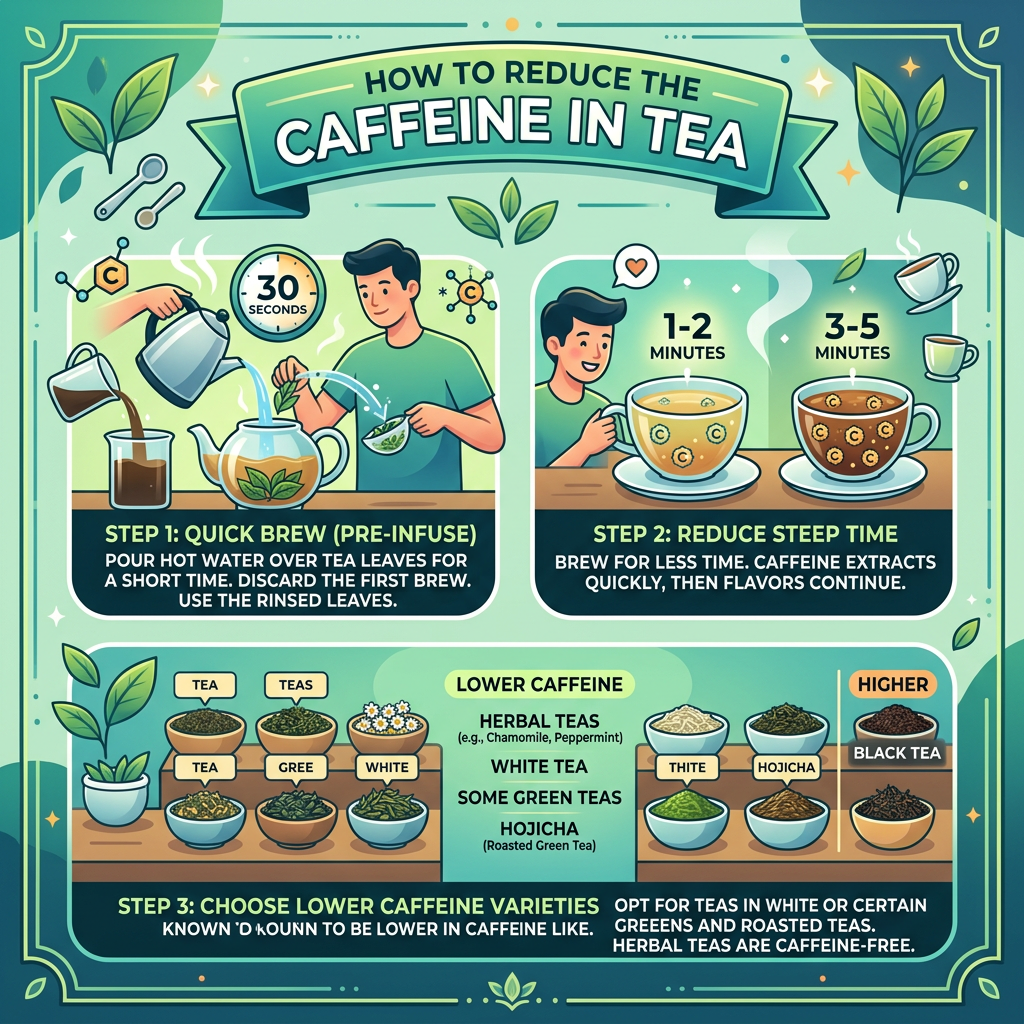
How to reduce the caffeine in tea
You do not have to stop drinking tea to reduce caffeine. Try one or more of these options:
- Choose herbal tea instead of black or green tea.
- Switch to decaf tea.
- Use half regular tea and half herbal tea.
- Steep the tea for less time.
- Use one tea bag for a larger amount of water.
- Choose a smaller cup.
- Avoid matcha if you want a lower-caffeine option.
- Check the caffeine content of bottled tea and chai concentrates.
Do not assume that a lighter color means less caffeine. A pale tea can still contain a meaningful amount.
Frequently asked questions
Does green tea have less caffeine than coffee?
Usually, yes. An 8-ounce cup of green tea often contains about 20 to 45 milligrams of caffeine, while brewed coffee contains about 96 milligrams on average. Serving size and brewing strength can change the comparison.
Does black tea have more caffeine than green tea?
Black tea often contains more caffeine than green tea, but the ranges overlap. A strong green tea can contain more caffeine than a weak black tea. The brand, tea leaves, serving size, and steeping time all matter.
How much caffeine is in a cup of tea?
An 8-ounce cup may contain about 40 to 70 milligrams in black tea, 20 to 45 milligrams in green tea, and 15 to 30 milligrams in white tea. Most herbal teas contain no caffeine.
Does tea have more caffeine than coffee?
Most of the time, coffee has more caffeine than tea. However, a large or strongly brewed tea can contain more caffeine than a small or weak coffee.
Is chai tea caffeine-free?
Usually not. Most chai tea is made with black tea, which contains caffeine. Chai made with rooibos or spices without tea leaves may be caffeine-free.
Does decaf tea contain caffeine?
Yes, usually a small amount. Decaffeinated tea is not always completely caffeine-free. Check the label if you need to avoid caffeine.
Is caffeine-free tea good before bed?
It may be a better option than caffeinated tea if caffeine affects your sleep. Herbal teas such as chamomile or peppermint are common choices, but check the ingredients because some blends contain caffeinated tea leaves.
Final thoughts
Tea can be a lower-caffeine alternative to coffee, but the amount varies by type, serving size, and brewing method. Black tea usually contains the most caffeine among common traditional teas, while green and white tea often contain less. Herbal tea is usually caffeine-free, but the label is still worth checking.
If you are tracking caffeine, start with the serving size listed on the package. Count all sources throughout the day, and pay attention to how caffeine affects your sleep and other symptoms. For pregnancy, medical conditions, or concerns about caffeine sensitivity, ask a qualified health professional for personal guidance.
“How to reduce the caffeine in tea”:
Looking for a caffeine-free option? Browse caffeine-free herbal teas and decaf tea blends.

16 thoughts on “How Much Caffeine Is in Tea? A Guide to Green, Black, Herbal, and Chai Tea”