
Green Tea for Weight Loss: What the Research Shows
Written by Alex McKenzie
Some commercial products promote that using green tea for weight loss is an easy way to lose some pounds. These products state that they will help you lose weight by burning off excess fat, increasing your metabolic rate, and allow you to loose weight regardless of your diet.
Related guides: Can Tea Help With Weight Loss?, How Much Caffeine Is in Tea?, and Tea Ingredients to Avoid for Weight Loss.
As stated previously, the scientific evidence regarding the use of green tea for weight loss is very limited.
However, it has been shown in several studies that green tea may slightly contribute to a reduction in body weight when its naturally occurring catechin is combined with caffeine. The benefits associated with this combination have varied widely among the studies; therefore, the benefit of using green tea for weight loss is likely to be relatively minor.
Green tea may offer modest support for weight management, but it is not a magic solution. Learn more about how tea may affect weight loss.
Quick answer: Green tea may support a small amount of weight loss for some people, especially when it contains both catechins and caffeine. The effect is usually modest, and brewed green tea is different from concentrated green tea extract supplements.

What is green tea?
Green tea is produced from leaves of Camellia sinensis plant. Black, White and Oolong teas, on the other hand, are all derived from the same Camellia sinensis plant. All three differ mainly in processing methods used to treat the leaves.
Green tea has not been fully fermented. In doing so, it preserves many naturally occurring substances including polyphenolic compounds referred to as catechins.
One of the most well-recognized catechins in green tea is a compound known as epigallocatechin gallate (referred to as EGCG). Green tea also contains varying levels of caffeine depending upon the brand name, type of brew (serving size), brew time, steep time and brewing method.
It’s this blend of catechins and caffeine that researchers believe accounts for the interest in studying green tea as an aid in weight loss. Catechins along with caffeine may influence the body’s metabolic processes (energy usage) and fat metabolism; however, there is no evidence that these two compounds will produce significant or guaranteed weight loss.
According to the National Center for Complementary and Integrative Health, green tea has not been clearly shown to be effective for weight loss. Some studies suggest a modest effect, while others find no meaningful change.
Can green tea help with weight loss?
Green tea may help with a small amount of weight loss, but the evidence is inconsistent.
A 2010 systematic review and meta-analysis looked at 15 studies involving 1,243 people. The researchers found that green tea catechins combined with caffeine were linked with:
- A body mass index reduction of about 0.55
- A body weight reduction of about 1.38 kilograms compared with caffeine alone
- A waist circumference reduction of about 1.93 centimeters
The researchers also found a smaller body weight reduction when catechins and caffeine were compared with a caffeine-free control. Green tea catechins without caffeine did not show the same benefits.
The authors described the clinical importance of the results as modest at best. In simple terms, the average change was small and would not produce the dramatic results suggested by some marketing claims. You can read the full study in PubMed.
Other research has reached a different conclusion. A 2014 systematic review and meta-analysis examined randomized trials lasting at least 12 weeks. It found no statistically significant effect on body weight among overweight or obese adults. The researchers did find a small change in body fat percentage, but they concluded that it was not clinically meaningful. The study is available through PubMed.
A separate meta-analysis found that catechins or an EGCG and caffeine combination had a small positive effect on weight loss and weight maintenance. However, the authors also noted that caffeine intake and other personal factors may affect the results. That study is also available on PubMed.
Taken together, the evidence suggests that green tea may have a minor effect for some people. It does not support the idea that green tea alone causes significant weight loss.
How might green tea aid weight loss?
Researchers have studied several possible explanations for the connection between green tea and weight loss.
Catechins and energy use
Catechins may affect the way the body uses energy. They may also influence fat oxidation, which is the process of using stored fat for energy.
These effects appear to be small. A change in fat oxidation during a study does not always lead to noticeable fat loss over time.
Caffeine and alertness
Caffeine can temporarily increase alertness. It may also have a small effect on energy expenditure.
Green tea generally contains less caffeine than coffee, but it still contributes to your daily caffeine intake. The caffeine content depends on the type of tea, serving size, and brewing method.
Green tea may therefore have a slightly different effect from decaffeinated green tea. The research showing a possible weight benefit often involved both catechins and caffeine.
Caffeine content can vary by tea type and serving size. Read our guide to how much caffeine is in tea.
Replacing high-calorie drinks
Green tea can support weight-related goals in a simpler way. When you drink unsweetened green tea instead of soda, sweet tea, or a high-calorie coffee drink, you may reduce your daily calorie intake.
This benefit comes mainly from the replacement, not from a special fat-burning effect. Adding sugar, honey, flavored syrup, cream, or sweetened creamer can increase the calorie content of the drink.
What is the best time to drink green tea for weight loss?
There is no strong evidence that one specific time of day makes green tea more effective for weight loss.
Some people prefer green tea in the morning or early afternoon because it contains caffeine. Drinking it earlier may also reduce the chance that caffeine affects your sleep.
You may want to avoid green tea close to bedtime if caffeine makes you feel restless or affects your sleep. Poor sleep can make it harder to follow healthy eating and activity habits.
Some people find that green tea causes stomach discomfort when they drink it on an empty stomach. If this happens, try drinking it with or after a meal.
The best time to drink green tea is the time that fits your routine and does not interfere with sleep, digestion, or other health needs. Timing is less important than your overall eating pattern and beverage choices.

How much green tea should you drink?
There is no proven amount of brewed green tea that guarantees weight loss.
A practical approach is to start with one cup and see how you respond. If you tolerate it well, you may choose to drink two or three cups during the day. Check the product label when possible, since caffeine levels can vary.
The U.S. Food and Drug Administration says that up to 400 milligrams of caffeine per day is not generally associated with negative effects for most healthy adults. This is a general limit, not a weight loss target. Your personal limit may be lower.
Remember to count caffeine from all sources, including:
- Coffee
- Black tea
- Energy drinks
- Soda
- Chocolate
- Pre-workout products
- Caffeine-containing medications
If caffeine causes anxiety, a fast heartbeat, headaches, digestive problems, or sleep trouble, reduce your intake and speak with a health professional if symptoms continue.
How to drink green tea for weight loss
If you enjoy green tea, these habits can help you keep the drink simple and lower in calories.
Choose unsweetened tea
Plain green tea contains very few calories. Sugar and sweetened flavorings can add calories quickly.
If you do not enjoy the taste of plain green tea, try:
- Lemon or lime
- Fresh mint
- Cinnamon
- Ginger
- A small amount of unsweetened iced tea flavoring
Watch serving sizes
A large bottle or café drink may contain more caffeine and added sugar than you expect. Read the label and check the serving size.
Do not treat tea as a meal replacement
Replacing meals with tea can make it harder to get enough protein, fiber, vitamins, and minerals. It can also lead to hunger and overeating later.
Green tea works best as a beverage that fits into a balanced eating pattern.
Be careful with “fat-burning” blends
Some weight loss teas contain several herbs, laxatives, stimulants, or concentrated extracts. The ingredients may not be clearly explained, and some products may provide more caffeine than expected.
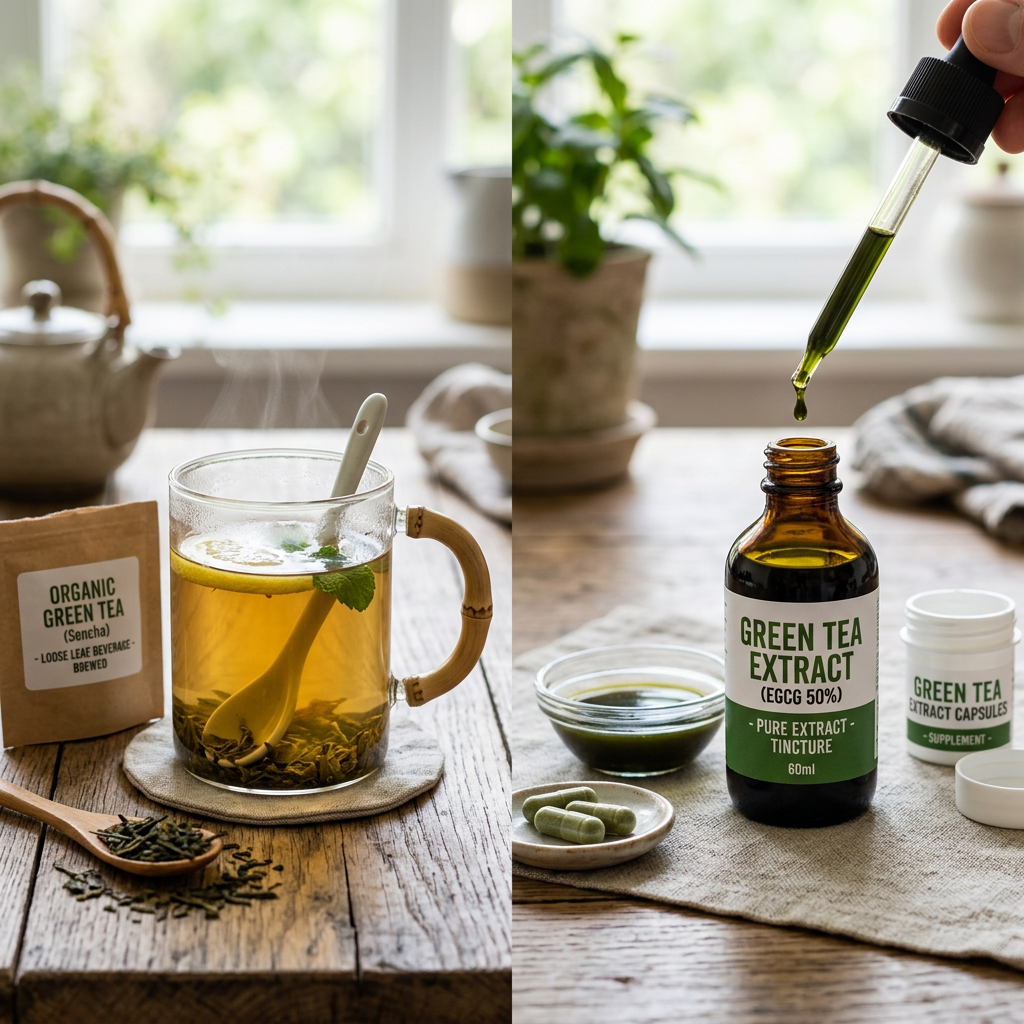
Green tea beverage versus green tea extract
Brewed tea is primarily comprised of dissolved solids (soluble compounds), moderate amounts of caffeine and catechins. Green tea extracts are commercialized in various forms (capsules, tablets, powder, and liquids) and represent a concentration of the active ingredients found in the original green tea.
Green tea extracts have been researched extensively to support weight loss claims. Nevertheless, studies regarding green tea extract cannot be assumed to provide information about brewed green tea itself.
An additional issue with green tea extracts is safety. According to the National Center for Complementary and Alternative Medicine (NCCIM), green tea extract may cause gastrointestinal problems including diarrhea, constipation, stomach pain, and elevated blood pressure. In addition, although rare, there have been documented cases of liver damage associated with taking green tea extracts (mainly those taken in tablet/capsule form).
Because of this, it would be incorrect to think that higher doses of a green tea extract would provide greater benefits as compared to regular brewed green tea. Therefore, when considering purchasing high dose green tea extracts, do not assume they will provide greater weight loss results simply because they contain a higher concentration of the active ingredients.
Matcha should also be treated with caution. Because Matcha is made from ground tea leaves, you ingest the entire leaf rather than merely drinking water that was passed through the leaves. Therefore, the amount of caffeine and catechins contained within Matcha can vary significantly depending upon the source/label. Check your labels, but treat Matcha like any other caffeinated beverage.Matcha also deserves some care. Since matcha contains finely ground tea leaves, you consume the leaf rather than only drinking water that has passed over the leaves. Caffeine and catechin levels can vary, so check the label and treat matcha as a caffeinated product.
Who should use caution with green tea?
Brewed green tea is generally tolerated by many adults, but it is not right for everyone.
Talk with a qualified health professional before using green tea extracts or high amounts of green tea if you:
- Are pregnant or breastfeeding
- Have a liver condition
- Have heart rhythm concerns
- Have high blood pressure
- Are sensitive to caffeine
- Take prescription medications
- Are preparing for surgery
The NCCIH reports that green tea may interact with some medicines, including nadolol, atorvastatin, and raloxifene. It may also interact with other medicines.
Green tea is a source of caffeine. During pregnancy, caffeine intake should stay within the limit recommended by your health professional. Caffeine can also pass into breast milk.
If you take medication, ask a doctor or pharmacist about possible interactions before using green tea supplements. This is especially important for products that contain concentrated extracts or several ingredients.
Some products contain ingredients that may cause side effects. Review these weight loss tea ingredients to avoid.
Key takeaways
- For some individuals, green tea may also provide a small level of weight loss.
- When catechin levels are increased by combining them with caffeine; this potential benefit appears to be more evident.
- Reviews of research studies show that results vary, and there is evidence that there is little difference in terms of body weight due to consumption of green tea.
- Average changes in body weight from consuming green tea (either brewed green tea or green tea extracts) are generally very low and do not represent significant changes.
- Replacing high calorie beverages such as soda pop with unsweetened green tea can help reduce overall calories consumed.
- It has not been established whether drinking green tea at a specific time during the day will result in an optimal weight loss benefit.
- Green tea extract products that contain concentrated forms of green tea extract have resulted in documented side effects, including one reported case of liver failure associated with the use of these products.
- Since brewed green tea and green tea extract supplements both contain caffeine, you should add the amounts of each to determine your total caffeine intake per day.
- Consuming green tea does not preclude engaging in other healthy lifestyle behaviors.
Frequently asked questions
Does green tea burn belly fat?
There isn’t sufficient research to support that drinking green tea will burn your belly fat. Studies have reported a very slight reduction in body weight and/or waist circumference; however, those findings have been inconsistent. No matter how much you drink, green tea has no ability to “spot reduce” fat loss from one particular part of the body (i.e., the stomach).
How does green tea aid weight loss?
The consumption of green tea’s catechin compounds and caffeine might cause a minute increase in how calories are burned and fat is broken down. However, even if this does occur, the impact would likely be too small to result in significant weight loss by most people. A potential benefit of switching from sweet beverages to unsweetened green tea, would be a reduction in caloric intake.
What is the best time to drink green tea for weight loss?
There is no scientifically proven best time. Morning or early afternoon may work well because green tea contains caffeine. Avoid drinking it close to bedtime if it affects your sleep.
How much green tea should I drink for weight loss?
No specific amount is proven to cause weight loss. Start with one cup and monitor your response. If you drink more, count the caffeine from all beverages and supplements. Most healthy adults should stay within the FDA’s general caffeine guidance.
Is green tea extract better than brewed green tea?
No. Green tea extract is more concentrated, but it is not proven to provide meaningful weight loss. It also has more safety concerns than ordinary brewed green tea, including rare reports of liver injury.
Can I drink green tea at night?
You can, but the caffeine may affect your sleep. If you are sensitive to caffeine, choose an earlier time of day or select a decaffeinated product. Decaffeinated tea may still contain a small amount of caffeine.
Can I add honey to green tea?
You can, but honey adds sugar and calories. If your goal is to reduce calories, use a small amount or drink the tea plain. Lemon, mint, ginger, and cinnamon can add flavor without much energy.
Is green tea safe during pregnancy?
Green tea contains caffeine and it is best to limit caffeine during pregnancy according to your health care providers recommendations. Also green tea extract supplements should not be used without a specific recommendation from your health care provider.
Can green tea replace exercise or a healthy diet?
No. Green tea will not replace regular activity, balanced meals, sufficient sleep, or medical treatment. Think of it as a low calorie beverage that may fit into other healthy habits.
Sip All Day Slimming Tea whenever you want a refreshing boost for your everyday weight loss and wellness routine.

Affiliate Disclosure
Some links on Weight Loss Tea Guide are affiliate links. If you buy something after clicking one of these links, we may earn a commission at no extra cost to you.
We only recommend products and resources we believe may be useful to our readers. Affiliate relationships do not affect our editorial opinions or product evaluations. Always check product labels and speak with a qualified health professional before using weight loss teas, supplements, or products that may affect your health.

6 thoughts on “Green Tea for Weight Loss: What the Research Shows”