
Herbal Tea for Weight Loss: Essential Facts That Actually Help
Written by Alex McKenzie
Herbal tea does not burn off body fat; however, drinking herbal tea (especially if unsweetened) instead of other high calorie beverage choices such as soda, sweet tea, juices, and sugared coffee drinks can help in weight loss efforts.
Related guides: Can Tea Help With Weight Loss?, Green Tea for Weight Loss, and Tea Ingredients to Avoid for Weight Loss.
Of the many types of herbal tea researched regarding weight loss (Herbal Tea for Weight Loss), green tea appears to be the best studied. Although there have been studies that suggest an increase in metabolism, the results of these studies appear to be minimal. Other herbal teas include ginger, peppermint, and hibiscus, which are additional options to consider when selecting a new tea type due to their varied flavors and aroma.
While these three teas may enhance your tea experience by adding variety and flavor to your routine, there is no evidence suggesting they will result in the reduction of fat from your body.
When looking at how to utilize tea as part of a weight management plan, I would recommend considering the following. First select a type of tea you enjoy. Second, keep the tea mostly unsweetened. Finally, substitute it for a higher calorie beverage.
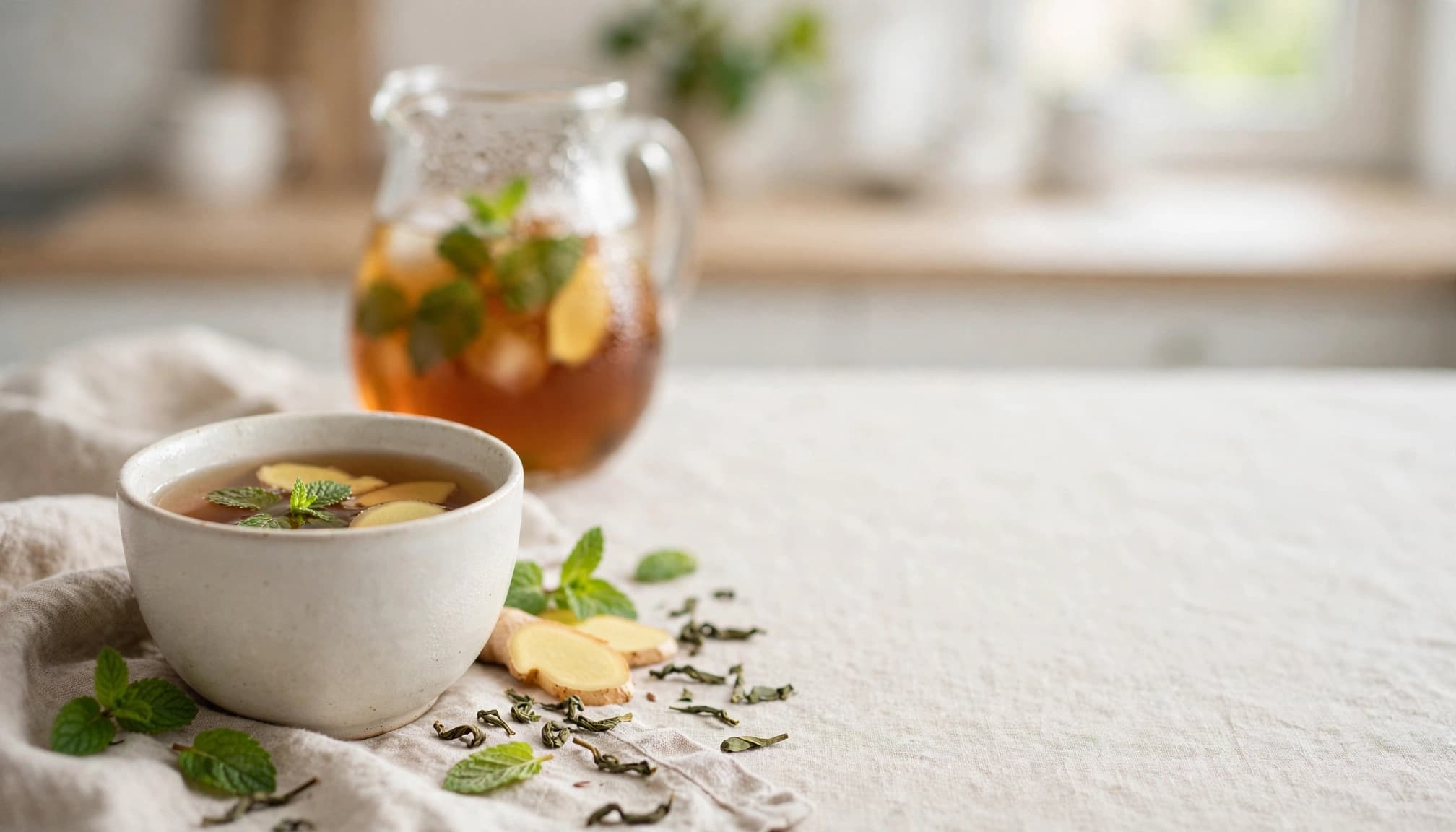
A warm cup of ginger mint herbal tea sits beside a glass pitcher of freshly brewed tea. The image supports the article’s advice to choose flavorful, unsweetened tea as an alternative to sugary drinks.
Key Takeaways
- Unsweetened tea may be helpful in assisting with weight loss if you are replacing them for other drinks that have high calorie content.
- Most of the research that supports tea for weight loss comes from green tea; however, even with an increase in consumption, the amount lost is generally minimal.
- Adding flavor through herbal teas (such as ginger and peppermint) adds no calories and does not significantly impact caloric intake.
- The claims made about detox teas, dandelion teas and senna teas helping to lose body fat are unsubstantiated and there is no reliable evidence to prove this claim.
- Generally speaking, brewed tea will likely be healthier than a concentrated extract or supplement designed to assist with losing weight.
- Ultimately, sustainable weight loss will require the development of habits related to eating foods that satisfy your hunger needs, engaging in some form of physical activity regularly, having adequate amounts of sleep, creating realistic expectations regarding your weight loss, and developing a balanced approach to both your diet and exercise.
Is Herbal Tea for Weight Loss Actually Effective?
It depends on what you expect tea to do.
If you expect one cup to speed up your metabolism and burn noticeable amounts of fat, the evidence is disappointing. No common herbal tea has been shown to cause meaningful weight loss on its own.
If you use tea to replace a sugary drink, the answer is more encouraging. A regular 12-ounce soda contains about 150 calories and around 42 grams of added sugar, according to the CDC’s Rethink Your Drink guidance. Replacing that drink with unsweetened tea can reduce your calorie intake without making your meal smaller.
That kind of change may seem small, but repeated beverage choices can add up. It can become a practical part of a broader weight management pattern. The CDC recommends choosing water and other unsweetened drinks more often, including unsweetened tea and coffee.
Tea works best as a replacement habit. It doesn’t need to be a treatment, cleanse, or appetite trick.
For more background, see Can Tea Help You Lose Weight?.
What Does the Research Say About Tea and Body Weight?
Green tea has the strongest evidence
Green tea is made from the Camellia sinensis plant. It’s technically a true tea, not an herbal tea. Herbal teas come from other plants, flowers, roots, or spices, such as peppermint, ginger, hibiscus, and dandelion.
Green tea contains polyphenols and antioxidants, including catechins such as EGCG. These compounds may offer health benefits, but antioxidant activity alone doesn’t prove weight loss.
Green tea receives more attention because it contains catechins and caffeine. These compounds may modestly influence metabolism, fat breakdown, or the oxidation process. That doesn’t establish meaningful fat burning.
Black tea, oolong tea, and white tea also come from Camellia sinensis. However, their processing, caffeine content, and evidence bases differ.
A 2024 systematic review and network meta-analysis in the British Journal of Nutrition found that green tea was linked with a small reduction in body weight in some comparisons.
The estimated changes were about:
- 1.23 kilograms compared with placebo
- 1.61 kilograms compared with water
Some trials also measured body mass index and blood sugar levels. Those outcomes shouldn’t be confused with evidence of weight loss.
However, the evidence was rated low or very low certainty. The studies varied in preparation, dose, and length. That makes it difficult to know whether ordinary brewed tea would produce a meaningful change in body mass index.
A separate Cochrane review of green tea for weight loss reached a more conservative conclusion. It found that tea preparations produced a very small, statistically non-significant change that was unlikely to matter much in real life.
The Cochrane review is also important because many studies used tea preparations or extracts rather than normal brewed tea. A capsule or concentrated product isn’t the same as steeping a tea bag in hot water.
Most herbal teas do not have strong weight-loss evidence
Ginger, peppermint, hibiscus, dandelion, and yerba mate all have different properties. Some contain caffeine. Others may affect digestion, fluid balance, or blood pressure. None should be treated as a proven fat-loss treatment.
Traditional use can tell us that people have enjoyed a plant for a long time. It doesn’t prove that the plant reduces body fat.
Early studies can also be interesting without being strong enough to guide a weight-loss plan. A small trial may use a high dose, a supplement, or a preparation that doesn’t match the tea sold in stores.
For that reason, choose herbal teas based on taste, caffeine preference, and how your body responds. Don’t choose them because a package promises rapid weight loss.
The Best Herbal Tea for Weight Loss Depends on Your Goal
The best tea is often the one you enjoy enough to drink instead of a higher-calorie beverage.
| Tea or product | What it may offer | Weight-loss evidence | Main concern |
|---|---|---|---|
| Green tea | Flavor and caffeine | Small, uncertain effect | Caffeine and extract safety |
| Ginger | Strong flavor and warmth | No strong fat-loss evidence | May bother some stomachs |
| Peppermint tea | Caffeine-free flavor | No strong fat-loss evidence | May worsen reflux |
| Hibiscus tea | Tart, fruity flavor | Not proven for fat loss | May affect blood pressure |
| Dandelion tea | Earthy flavor | No reliable body-fat benefit | Safety concerns in larger amounts |
| Senna tea | Short-term laxative effect | Does not burn fat | Cramping, diarrhea, dehydration |
Choose unsweetened tea to cut liquid calories
Plain brewed tea has few or no calories. That makes it a useful replacement for sweet drinks.
You can choose:
- If you are looking for something that has Caffeine and is supported by the most research it would be Green Tea.
- If you are interested in an Iced Tea with a cool, strong taste but do not want to have caffeine then Peppermint Tea could be your choice.
- If you are someone who likes a warm, spiced, strong drink and like Ginger then you may choose Ginger Tea.
- If you are someone who prefers a tart iced tea Hibiscus Tea could be what you are looking for.
- If you are looking for a stronger version of a caffeinated drink than Black Tea can provide.
- If you prefer to have Matcha (Green Tea) as a Powdered option, however know that the high concentration does not necessarily mean it is safe or stronger
The preparation matters. Sugar, honey, sweetened creamers, flavored syrups, whipped toppings, and large amounts of milk can turn a low-calorie drink into a high-calorie one.
Honey isn’t forbidden, but it still adds sugar and calories. If you usually add two teaspoons, try one teaspoon for a while. You can also use cinnamon, lemon, mint, or a small splash of unsweetened milk for extra flavor.
See Green Tea for Weight Loss: What the Research Shows for a closer look at the evidence.

Use ginger and peppermint for taste, not fat burning
Ginger and peppermint can make a helpful caffeine-free choice. Some people enjoy them after a meal or in the evening for warmth and digestive support.
The evidence doesn’t show that either tea melts fat or creates a meaningful increase in metabolism. Their value is more practical. A flavorful drink may help you avoid a sweet drink or make plain water less boring.
Your digestion matters too. Ginger may feel comfortable for some people and irritating for others. Peppermint can worsen heartburn or reflux in some people because it may relax the muscle between the stomach and esophagus.
If you have frequent reflux, stomach pain, bloating, or changes in your bowel habits, don’t keep covering up the symptoms with tea. Talk with a qualified health professional.
Hibiscus can add flavor, but it isn’t a slimming tea
Hibiscus tea has a bright red color and a tart flavor. It can be a good choice for unsweetened iced tea, especially when combined with citrus or mint.
Some research has looked at hibiscus and blood pressure. The National Center for Complementary and Integrative Health says the evidence is limited and any effect appears small.
That doesn’t make hibiscus a weight-loss treatment. Cinnamon-flavored tea shouldn’t be relied on to manage blood sugar levels. People taking blood-pressure medicine should also ask a doctor or pharmacist before using hibiscus regularly or in concentrated supplement form.
Be Careful With Detox, Dandelion, and Slimming Tea Claims
“Detox tea” and “slimming” are marketing terms. They do not prove that a product removes toxins or burns fat.
Some products marketed for weight loss may cause more urination or bowel movements. That can lower the number on the scale for a short time, but the change usually reflects water or stool loss. It is not the same as fat burning or losing body fat.
Dandelion tea is not a proven fat burner
Dandelion tea is often promoted as a natural diuretic. A diuretic increases urination, which may lead to a temporary change in fluid weight.
That is different from fat loss.
The NCCIH information on dandelion says dandelion is likely safe in the amounts commonly found in food, but less is known about larger amounts. It may also be a poor choice for people with certain health conditions or medication needs.
Don’t assume that a plant is safe simply because it grows naturally. Check the full ingredient list and ask a pharmacist if you take medication.
Avoid senna tea for weight loss
Senna is a stimulant laxative. It is used for short-term constipation, not for reducing body fat.
According to MedlinePlus information on senna, senna can cause stomach cramps and discomfort. It shouldn’t be taken for more than one week without talking with a doctor.
Repeated or excessive use may cause diarrhea, dehydration, and electrolyte problems. A bowel movement after drinking senna tea does not mean your body burned fat.
If constipation is a regular problem, look for the cause and get medical advice. Don’t use laxative tea as a weight-loss strategy.
You can also read Weight Loss Tea Ingredients to Avoid for a closer look at ingredients commonly found in slimming products.
How to Use Herbal Tea for Weight Loss
Tea is most useful when it fits your real life.
Start with the time of day when you are most likely to drink calories. For some people, that is the midafternoon slump. For others, it is takeout night, a drive-through coffee, or the time after dinner when they want something sweet.
Keep tea bags where you can see them. Put a mug near the kettle. Brew a pitcher of unsweetened iced tea before a busy week. Carry a travel mug if you often buy sweet drinks while commuting.

A glass of iced herbal tea and a cup of green tea sit beside a balanced breakfast. The image shows how tea can fit into a healthy eating routine without replacing a satisfying meal.
Match the tea to your usual craving
If you want something fizzy, pour chilled herbal tea over ice and add plain sparkling water.
If you want a sweet coffee drink, try cinnamon, vanilla extract, or a splash of unsweetened milk in tea. These additions may provide flavor without the large amount of sugar found in many flavored coffee drinks.
If you want dessert after dinner, choose peppermint or ginger tea, or add cinnamon for a warmer flavor. It may not remove the craving, but it can give you a comforting ritual while you decide what you actually want.
If you need caffeine, green or black tea can fit earlier in the day. Avoid late caffeine if it interferes with sleep. Poor sleep can make hunger, cravings, and food choices harder to manage.
Let tea support meals, not replace them
Tea can help reduce the habit of sipping calories all day. It should not replace meals.
A weight-loss plan still needs enough food, protein, fiber, and fluids. Trying to suppress real hunger with tea often backfires. You may feel tired, distracted, and overly hungry later.
Build meals around foods that help you stay satisfied, such as:
- Vegetables and fruit
- Beans, lentils, eggs, fish, poultry, or other protein foods
- Whole grains and potatoes
- Yogurt or other calcium-rich foods
- Nuts, seeds, or avocado in reasonable portions
The CDC’s weight-loss guidance emphasizes gradual progress, regular activity, good nutrition, enough sleep, and stress management. Tea can support weight management when it fits with satisfying meals, regular movement, enough sleep, and realistic routines. It cannot replace those habits or professional care.
Drinking herbal tea on an empty stomach is generally fine if you tolerate it well, but it will not speed up weight loss. Some people find that acidic or strong herbal teas like ginger or peppermint can irritate an empty stomach, so it is often better to enjoy them with or after a meal.
Brewed Tea Is Usually Better Than Extracts
A normal cup of brewed tea and a concentrated green tea supplement can contain very different amounts of active compounds.
The NCCIH green tea fact sheet notes that extract supplements may cause nausea, constipation, abdominal discomfort, and increased blood pressure.
There is also a liver safety concern. The LiverTox entry on green tea reports that concentrated products have been linked to rare cases of acute liver injury. The risk appears to be associated mainly with extracts rather than ordinary brewed tea.
That does not mean you should panic over a cup of brewed tea. It means you shouldn’t assume a high-dose “fat burner” is simply a stronger beverage.
Be especially careful with products that promise:
- Rapid weight loss
- A flat stomach overnight
- A full-body cleanse
- Appetite suppression
- Fat burning without diet or exercise
- A secret herbal blend
Multi-ingredient supplements can make it difficult to identify which ingredient caused a side effect or interacted with a medication.
Talk with a doctor or pharmacist before using concentrated tea extracts if you are pregnant, breastfeeding, managing liver or kidney disease, taking medication, or concerned about blood pressure.
For more information about serving sizes, see How Much Caffeine Is in Tea?.
Frequently Asked Questions
Can you drink herbal tea every day?
Many adults can enjoy common unsweetened brewed teas as part of a daily routine. However, the ingredients matter. Avoid drinking laxative tea every day, and be cautious with blends containing stimulants or concentrated extracts.
If a tea causes headaches, heartburn, nausea, diarrhea, or other unusual symptoms, stop using it and ask a health professional for advice.
Does iced herbal tea work as well as hot tea?
Yes. The temperature doesn’t determine whether tea can replace a sugary drink. Iced tea can be a useful option in warm weather, as long as it isn’t loaded with sugar or syrup.
Is honey okay in tea when you are trying to lose weight?
Honey isn’t off-limits, but it adds sugar and calories. Use a smaller amount if you’re trying to reduce calories from drinks. You can also gradually reduce the sweetness as your taste preferences adjust.
When is the best time to drink green tea?
Drink green tea when it fits your schedule and doesn’t affect your sleep. If caffeine causes nervousness, headaches, heartburn, or a racing heartbeat, choose a caffeine-free herbal tea instead.
Are tea bags as good as loose-leaf tea?
Both can work. The most useful choice is the one you’ll prepare and drink consistently. Loose-leaf tea isn’t automatically better, and tea bags aren’t automatically lower quality.
Can tea reduce belly fat?
No tea has been shown to target belly fat. A small amount of overall weight loss may change waist measurements over time, but spot reduction isn’t possible.
Be skeptical of products that promise to flatten your stomach in a few days. That result usually reflects water loss, laxative effects, or marketing rather than a reduction in body fat.
A More Useful Way to Think About Tea
Unsweetened tea supports weight loss because it is a low calorie alternative to sugary drinks. Even though this benefit may not dramatically change your body; there are some real benefits.
If green tea has any additional effect on weight loss, the evidence supporting this is limited and unlikely to create any dramatic changes in your body. While hibiscus, peppermint and ginger can make healthy drinking habits more enjoyable, they have no scientific basis for being fat burning agents.
You should avoid detox teas and laxative teas, as well as concentrated extracts of tea. Rather than relying solely on herbal teas to keep you satisfied, focus on building meals and habits that will allow you to feel satisfied, and let tea play a simple role in your diet.
Make All Day Slimming Tea part of your daily routine and enjoy a flavorful way to support your weight loss and wellness goals.

Health Disclaimer
This article is for general education and is not medical advice. Talk with a doctor, registered dietitian, or pharmacist before using herbal products or supplements, especially if you are pregnant, breastfeeding, managing a health condition, or taking medication.

8 thoughts on “Herbal Tea for Weight Loss: Essential Facts That Actually Help”