
Raspberry Leaf Tea: Benefits, How to Brew It, and Safety
For generations, herbalists have used raspberry leaf tea. Some have known it as a comforting drink for women in their third trimester, but others just like to sit back and enjoy the fresh, caffeine-free herbal blend.
However, online claims tend to be somewhat exaggerated. Several online forums go so far as to claim this tea can induce labor anytime you want, treat menstrual cramps entirely, or result in quick weight loss. Science provides a more tempered view.
Here in this guide, we look at what raspberry leaf tea is, what it tastes like when you compare it to other teas, what clinical research says about its supposed health benefits, and how you can safely make some at home.
A quick personal note:
When I finally released the dried raspberry leaves from their pouch, I immediately anticipated a sweet, fruity aroma reminiscent of jammy fruit or at least fresh berries. But the dry aroma was very comparable to an herbal black tea, rustic and earthy. I was once again reminded that herbal practices are not about the sweet fruit flavors (although some have those) but about thoughtfully using the leaves of that plant.

Key Takeaways
- No Caffeine: Raspberry leaf tea comes from the leaves of the red raspberry plant, not the actual fruit that most people think of when they hear “raspberry.”
- Taste: The taste is comparable to that of a black tea. It will not have a sweet berry flavor but more of a grassy flavor due to the tannins it contains.
- Research on Pregnant Women: There is no research that has shown that raspberry leaf tea will cause or help induce labor, or prevent any negative outcomes during childbirth.
- Study Used Tablets: When researching human studies, most use tablets that contain a dry extract of raspberry leaf that was taken orally in a clinical environment, not the actual tea.
- Speak to your doctor: If you are pregnant, on medication, or have any health conditions, speak to your doctor before drinking any type of herbal tea.
What Is Raspberry Leaf Tea?
Raspberry leaf tea is made from the dried leaves of the regular red raspberry plant.
Do not mistake raspberry leaf tea for a tea flavored with raspberry. Many raspberry teas out there are actually just black tea, green tea, or hibiscus mixed with some dried berries and/or flavoring. These teas will give you a nice sweet berry flavor. They also most likely have caffeine because they are tea-based.
Raspberry leaf tea only has the leaves—the dried green leaves of the raspberry plant, to be exact. There is no caffeine in this tea. It does have many vitamins and minerals, some of which include tannins, flavonoids, and fragarine. Fragarine has been shown to affect muscles in lab animals, so herbalists used to recommend the leaves to help tone your uterus. However, what happens in the lab to a sample of tissue is not guaranteed to happen in the human body.
There are many caffeine-free teas you can drink to help maintain a healthy weight loss regimen. Check out our list of caffeine-free teas to help lose weight if you want to know more about the various types.
What Does Raspberry Leaf Tea Taste Like?
If you’re looking for a sweet, fruity beverage that has the flavor of plump, summertime raspberries, think again.
The brewed liquid is amber-colored and has a smoky, full-bodied flavor. Several tea drinkers have noted it is, in fact, very similar to drinking a mild black tea with no sugar added but offers a smooth, non-bitter, non-astringent flavor, with earthy herbal and grassy tones.
The natural tannins provide a slight, smooth texture. The lack of sugar makes it suitable to use with minimal sugar additions:
- A generous squeeze of fresh lemon juice
- A sprig of fresh mint
- A half-teaspoon of pure honey
- Simply a splash of unsweetened almond milk.
Potential Benefits of Raspberry Leaf Tea
There are many reasons why people drink raspberry leaf tea. Here are some of the benefits backed by science.
1. Naturally Caffeine-Free Hydration
Drinking raspberry leaf tea will hydrate your body. Drinking water all day can get boring. An herbal tea can keep you hydrated while tasting great and being caffeine- and sugar-free. Switching out your soda, coffee, and bottled tea that are loaded with sugar for just herbal tea is a great step toward being healthier.
2. Plant Compounds and Antioxidant Activity
The leaves from the raspberry plant have many antioxidants. Studies have shown that the polyphenols in raspberry leaves can act as antioxidants. This can help protect cells from free radical damage. As with any drink that contains polyphenols, it can help you stay healthy. However, you will not cure diabetes by drinking raspberry leaf tea.
3. Traditional Menstrual Comfort
Raspberry leaf tea has been used by women to ease the symptoms of PMS. It is thought that fragarine can help your uterus relax. There are not many studies that have looked into this in humans. But drinking a hot cup of tea can help you feel better. If you suffer from bad period cramps or endo, it is not going to replace your medication.
4. Realistic Weight-Management Expectations
Many weight loss teas include raspberry leaves in their ingredients. By itself, raspberry leaf tea has almost no calories. If you replace sugary drinks with this, you will be cutting calories. But the leaf itself is not going to help you burn fat or lose weight faster.
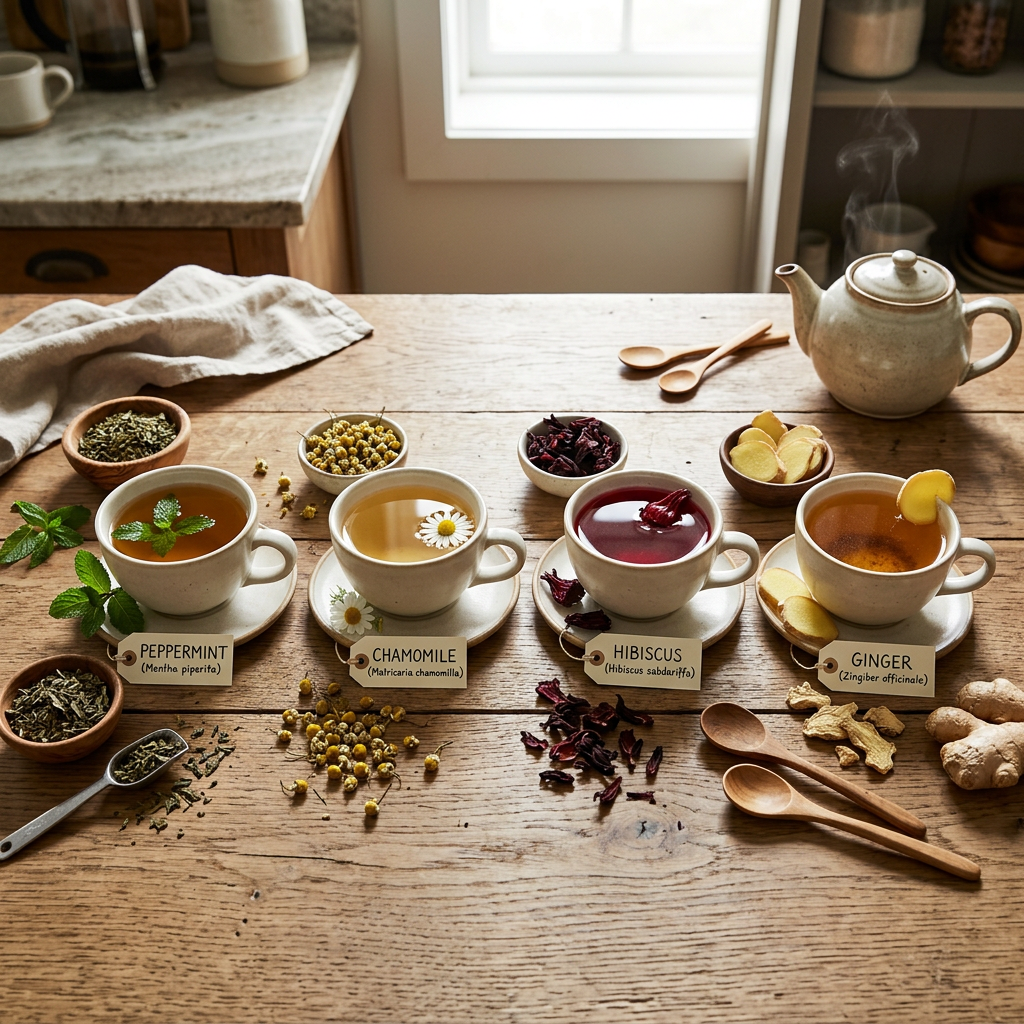
Comparing Common Herbal Teas
The table below outlines how raspberry leaf tea compares to other popular herbal infusions:
| Herbal Tea Base | Primary Flavor Notes | Natural Caffeine Content | Common Traditional Use | Strength of Clinical Evidence |
|---|---|---|---|---|
| Raspberry Leaf | Earthy, herbaceous, mild black tea notes | Naturally caffeine-free | Uterine toning, third-trimester pregnancy | Limited and mixed human trials |
| Chamomile | Floral, sweet, apple-like aroma | Naturally caffeine-free | Evening relaxation, sleep support | Moderate evidence for relaxation |
| Peppermint | Crisp, cooling, menthol flavor | Naturally caffeine-free | Digestive comfort, soothing bloating | Moderate evidence for peppermint oil |
| Rooibos | Nutty, naturally sweet, woody | Naturally caffeine-free | General hydration, antioxidant intake | Moderate antioxidant research |
| Ginger Root | Spicy, peppery, warming | Naturally caffeine-free | Nausea relief, settling the stomach | Strong evidence for mild nausea |
Commercial Tea Products vs. Single-Herb Brews
Make sure you check what is in the tea you are buying if you plan to drink these types of teas.
This article contains affiliate links. We would like to disclose that we have an affiliate link for All Day Slimming Tea. This will take you to their commercial product. If you choose to purchase through this link, we may receive a small commission from your sale. There is no extra cost to you.
There are many different teas that contain a mixture of green tea, garcinia, ginger, dandelion, and other fruit blends. These can be fine if that’s what you want to drink. But it’s different from just one herb tea. You can steep one herb for as long or short as you like. There aren’t stimulants in the blend, and you know what your body can handle.
Raspberry Leaf Tea and Pregnancy
This is the question I get asked about the most, and something to take very seriously.
Is Raspberry Leaf Tea Safe During Pregnancy?
There is not much clinical information that we can go off of when it comes to drinking raspberry leaf while pregnant.
There is one research study that was done on the subject. Twelve different papers were studied on raspberry leaf, ranging from human effectiveness to animal studies. They stated that there was not enough research to back up its therapeutic uses or to know if it could cause any harm to mother or baby.
Another study that was done on animals showed that the rats had longer pregnancies and their offspring matured faster. Although we can’t use animal studies to help determine if it’s safe or not, it’s a good reason why doctors don’t recommend taking it.
Always speak with your doctor or midwife before consuming any type of herbs while pregnant, as they are not regulated to the standards that drugs are.
Can It Induce Labor or Make Labor Easier?
No. Raspberry leaf will not make you go into labor. It does not have oxytocin in it, and you will not go into labor after one cup.
A study was done in the Journal of Midwifery & Women’s Health that looked at 192 first-time mothers who were low risk. They drank raspberry leaf in tablet form, 1.2 grams two times a day, starting at 32 weeks until delivery. Or they were given a placebo.
The results showed that raspberry leaf did not affect the length of the first stage of labor. It shortened the second stage by 9.59 minutes, which was considered significant. There were fewer forceps deliveries in the group that took raspberry leaf, at 19.3% compared to 30.4% that didn’t. The study also said there were no negative side effects on the babies or mothers. But they stated that there was little difference and that more studies need to be done to find correct dosages and see if it’s truly effective.
Another study was done in the Australian College of Midwives Journal that showed that women who drank raspberry leaf tea had less induced ruptures of membranes and C-sections. Again, we can’t conclude that drinking raspberry leaf will give you these results because it was only an observational study. But another study on PubMed Central showed that there were fewer interventions used during labor with the women that drank raspberry leaf. But they went on to say that their results should not be taken as fact that it is safe to drink while pregnant.
Keep in mind that all of these studies were using oral tablets of dried leaves, not a hot brew of unknown amounts.
What Week Can I Drink Raspberry Leaf While Pregnant?
It’s best not to drink raspberry leaf while in your first and second trimesters. Most herbalists will tell you this. During your first trimester, your body is going through a lot. From morning sickness to hormones changing, your uterus is very delicate.
Some maternity doctors and midwives will allow you to start drinking it in your third trimester. Around week 32 or 36 weeks is usually when you can start. Start with one cup a day and see how your body reacts. Don’t start drinking raspberry leaf while pregnant unless you have cleared it with your doctor or midwife.

How to Brew Raspberry Leaf Tea
It’s pretty easy to make raspberry leaf tea at home. Since there aren’t oils in the leaf, you want to let it steep for a bit longer to get all the nutrients out of the leaf.
Raspberry Leaf Tea Recipe
- Prep time: 2 minutes
- Brew time: 10 minutes
- Total time: 12 minutes
- Yield: 1 serving (approx. 8 fl oz)
Ingredients
- 1 to 2 teaspoons dried red raspberry leaves (or 1 pre-packaged tea bag)
- 8 fluid ounces (about 240 ml) freshly boiled water (205°F to 212°F)
- Optional: 1 thin slice fresh lemon, 1 fresh mint sprig, or 1/2 teaspoon pure honey
Method
- Put the dried raspberry leaves in a stainless steel infuser basket or tea ball. You can also place them in a paper filter or straight in your cup.
- Boil fresh, filtered water. Pour 8 oz of boiling water over your tea leaves.
- Place a small plate or lid on top of your cup or teapot. Covering your tea will allow the flavors and aroma to stay in your cup. Allow your tea to steep for 5-10 minutes. Steeping longer will produce a stronger taste.
- Strain your tea. Either remove your infuser or pour through a fine mesh strainer.
- Lemon and honey are both optional add-ins. Try tasting your tea plain and then see if you enjoy it with some extra flavor.
To explore more practical drink preparations, explore our full collection of homemade tea recipes and preparation techniques.
How Much Raspberry Leaf Tea Can You Drink?
There isn’t a definitive study that says you should only drink “x” amount of raspberry leaf tea. How much is safe for you to drink will vary based on your health, pregnancy, kidneys, and tolerance to tannins.
If you are simply enjoying raspberry leaf tea as a drink, it’s safe to have one to two cups a day if you aren’t pregnant.
Drinking too much tannic tea can cause an upset stomach, diarrhea, or vomiting. If you experience these symptoms, reduce your intake or stop drinking raspberry leaf tea.
Who Should Check With a Healthcare Professional First?
Although tea seems harmless, some natural components can affect your body. Consult your doctor or dietitian before drinking raspberry leaf tea if you fall under these categories:
- You’re pregnant – Always talk to your doctor or midwife before drinking raspberry leaf tea while pregnant. If you’ve experienced premature labor, high blood pressure, or low-lying placenta in previous pregnancies, please be sure to mention this to your doctor.
- Taking medication – Like most plant leaves, they contain tannins. These can interact with your medication and some vitamins such as iron.
- You have a condition that reacts to hormones – Raspberry leaf has been found to have some phyto-compounds. There isn’t much research on how these affect the human body hormonally, so if you suffer from endo or fibroids, it’s best to speak with your doctor.
- Having surgery – Any herbal supplements that may impact your body should be stopped 2 weeks prior to your procedure.
Frequently Asked Questions
Is raspberry leaf tea the same as raspberry tea?
They’re not the same thing. Raspberry leaf tea is just what it sounds like… it’s the leaves from the raspberry plant. It has a very earthy taste similar to black tea. Most raspberry tea you’ll find at the store is black, green, or fruit-flavored tea with actual raspberries in it. It’s much sweeter and tarter than leaf tea.
Does raspberry leaf tea contain caffeine?
No. Raspberry leaf tea does not contain caffeine. However, when purchasing raspberry leaf tea in a box, check the label. There are companies that add green or white tea to their blends, which will increase the amount of caffeine in your cup.
Can you drink raspberry leaf tea every day?
Yes, as long as you aren’t pregnant. One to two cups a day is perfectly fine. If you are pregnant, speak with your doctor about drinking this tea every day.
Will raspberry leaf tea help with period cramps?
Many herbalists believe that raspberry leaf can help with your menstrual cycle. The idea is that it tones the uterus and eases pain. More studies need to be done on this claim. I feel better when I drink it, but I wouldn’t rely on it to fix my periods.
Closing reflections from my kitchen counter:
Throughout the years, I experimented with various herbal teas; raspberry leaf tea was always there to teach me patience. It’s certainly not a remedy for instant gratification or magic in a cup, and if current research is anything to go by, we ought to be tempering our hopes. For me, the satisfying part is much more modest: pausing for ten minutes, enjoying the steam rising from the infuser, and drinking a good earth tea that can do with no sugar or caffeine.
Conclusion
Raspberry leaf tea is a great tea to drink if you love the earthy flavor of herbal teas. It’s been used for centuries, and although there are many benefits listed online, it’s not going to speed up your labor or melt away those baby pounds. It’s just a nice, healthy tea to drink instead of sugar-filled beverages.
Speak to your doctor if you are pregnant or on medications and/or have ongoing health issues.
Want to learn more about All Day Slimming Tea? Click here.
Disclosure: This is an affiliate link, so I will receive a commission if you purchase at no additional cost to you. This recipe post does not claim what the product may claim on its product page.

