
Herbal Tea Recipes for a Healthy Routine
Drinking herbal tea is a great alternative to soda, sweet tea, or coffee. You can drink herbal tea to spice up your day. Herbal tea consists of leaves, flowers, roots, spices, and fruits that have been steeped in hot water.
You don’t have to spend a fortune on powders to create great-tasting herbal tea recipes. All you need are some fresh ingredients from the grocery store to create a delicious cup of tea in no time.
There are many benefits to adding herbal tea to your diet. Drinking a cup of chamomile tea isn’t going to solve your lack of sleep. Ginger tea isn’t going to cure nausea, and you can’t drink a tea with fruits and expect to counter all the sugary foods you eat.
However, drinking herbal tea is a good way to increase fluid intake, decrease sugar consumption, relax, and drink something that is better for you than what you may have been drinking.
For a closer look at what herbal tea can and cannot do for weight management, read our guide to herbal tea for weight loss.”

Key Takeaways
- You can add a lot of taste to your herbal tea recipe without too much sugar or calories.
- Most herbal teas do not contain caffeine, but some blends or bottled options may.
- Some examples of herbal teas include chamomile, peppermint, ginger, hibiscus, and rooibos.
- Ginger can be helpful for certain kinds of nausea, but it can also cause heartburn or upset your stomach.
- Chamomile tea can cause allergic reactions and may react with certain medications.
- If you suffer from acid reflux or heartburn, you may not want to drink peppermint tea.
- Adding honey, sugar, juice, and sweetened creamer will all add extra calories.
- Herbal tea should be added to your diet, not used as a replacement.
- Always talk to your doctor if you are pregnant, nursing, or taking any medication.
- Keep it simple; that way, it’s easier to maintain your tea habit.
Affiliate disclosure: This section contains an affiliate link. We may earn a commission if you buy through it, at no extra cost to you.
Considering a packaged tea? Review AllSlimTea’s ingredients and safety information before deciding. View the AllSlimTea offer.
What Makes a Herbal Tea Recipe Healthy?
A healthy herbal tea recipe does not need to promise detoxification or rapid weight loss. Instead, look for four practical qualities.
1. It is low in added sugar
Plain brewed tea is very low in calories. USDA FoodData Central entries for brewed herbal tea generally show about 0 to 1 calorie per 100 grams.
The calorie count changes when you add:
- Sugar
- Honey
- Maple syrup
- Sweetened fruit juice
- Flavored creamers
- Syrups
These ingredients are not automatically bad. The issue is how much you use and how often you drink them. If you want a sweeter drink, start with a small amount and taste it before adding more.
“For a closer look at what herbal tea can and cannot do for weight management, read our guide to herbal tea for weight loss.”
2. It uses simple ingredients
Recipes with a short ingredient list are easier to prepare and easier to understand. Fresh ginger, lemon, mint, cinnamon, and dried herbs can provide plenty of flavor.
You do not need to buy a supplement powder to make herbal tea.
3. It fits your caffeine needs
Pure chamomile, peppermint, ginger, hibiscus, and rooibos teas are commonly used as caffeine-free options. However, some products combine herbs with green tea, black tea, yerba mate, or other caffeinated ingredients.
Read the package if you are limiting caffeine. The FDA lists green tea and black tea as caffeine sources, and the amount can vary between products.
4. You tolerate the ingredients
A recipe can be healthy in general and still cause problems for you. Ginger may cause heartburn. Peppermint may worsen reflux for some people. Chamomile may cause an allergic reaction, especially in people who are allergic to ragweed, chrysanthemums, marigolds, or daisies.
Pay attention to how your body responds.
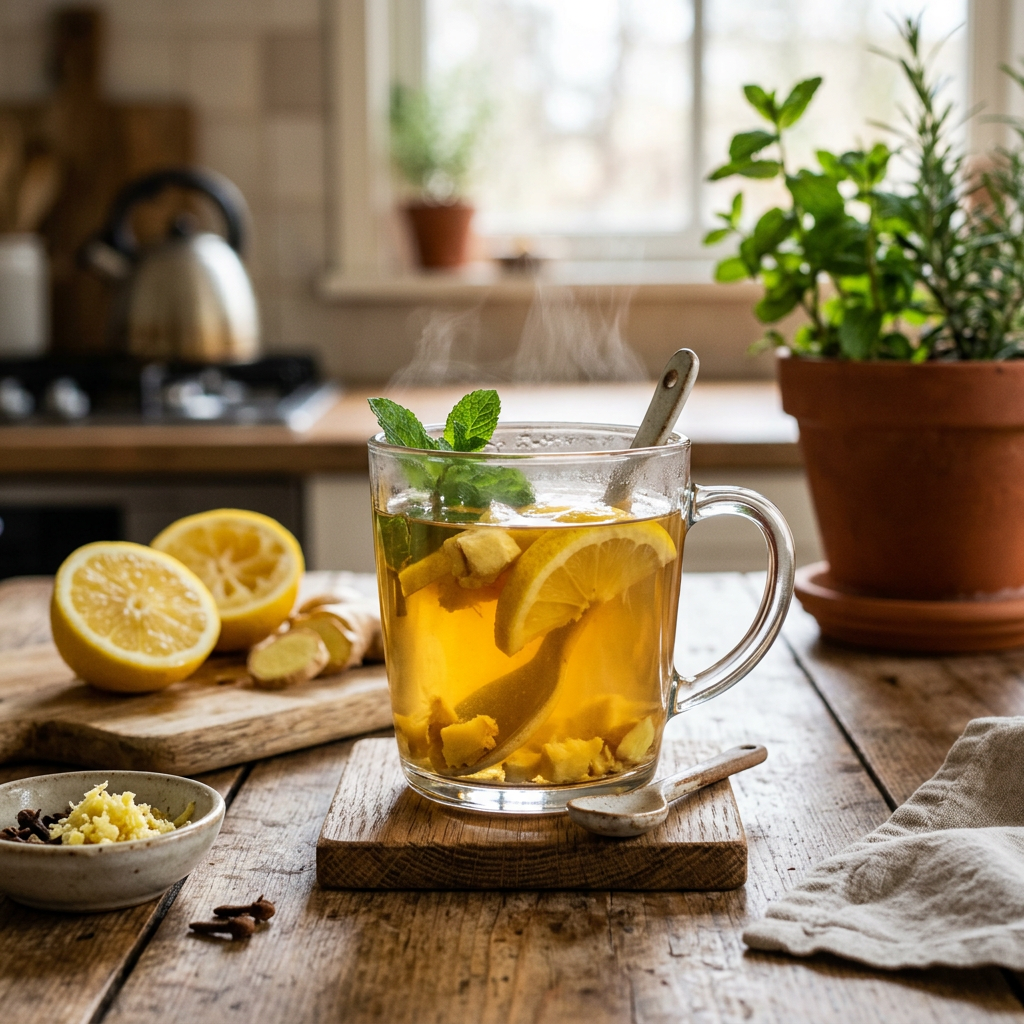
1. Fresh Lemon Ginger Tea
This recipe has a sharp, warming flavor. It works well in the morning, after a meal, or when you want a non-caffeinated drink with more flavor than plain water.
Ginger has been studied for nausea and vomiting. The National Center for Complementary and Integrative Health says research suggests ginger may help with nausea linked to pregnancy, although many studies use supplements instead of a regular cup of tea.
Ingredients
- 1 inch fresh ginger
- 10 ounces hot water
- 1 to 2 teaspoons fresh lemon juice
- Optional: 1 teaspoon honey
Directions
- Wash and thinly slice the ginger.
- Place it in a mug or small teapot.
- Pour in hot water.
- Steep for 5 to 10 minutes.
- Remove the ginger slices.
- Add lemon juice.
- Add a small amount of honey only if needed.
Why it fits a healthy routine
This tea can replace a sugary drink and gives you a strong flavor without much added sugar. Lemon adds brightness, while ginger gives the drink warmth.
Helpful caution
Ginger can cause abdominal discomfort, heartburn, diarrhea, or mouth irritation in some people. If you take medication or are pregnant, ask your healthcare professional before using large amounts of ginger or ginger supplements.
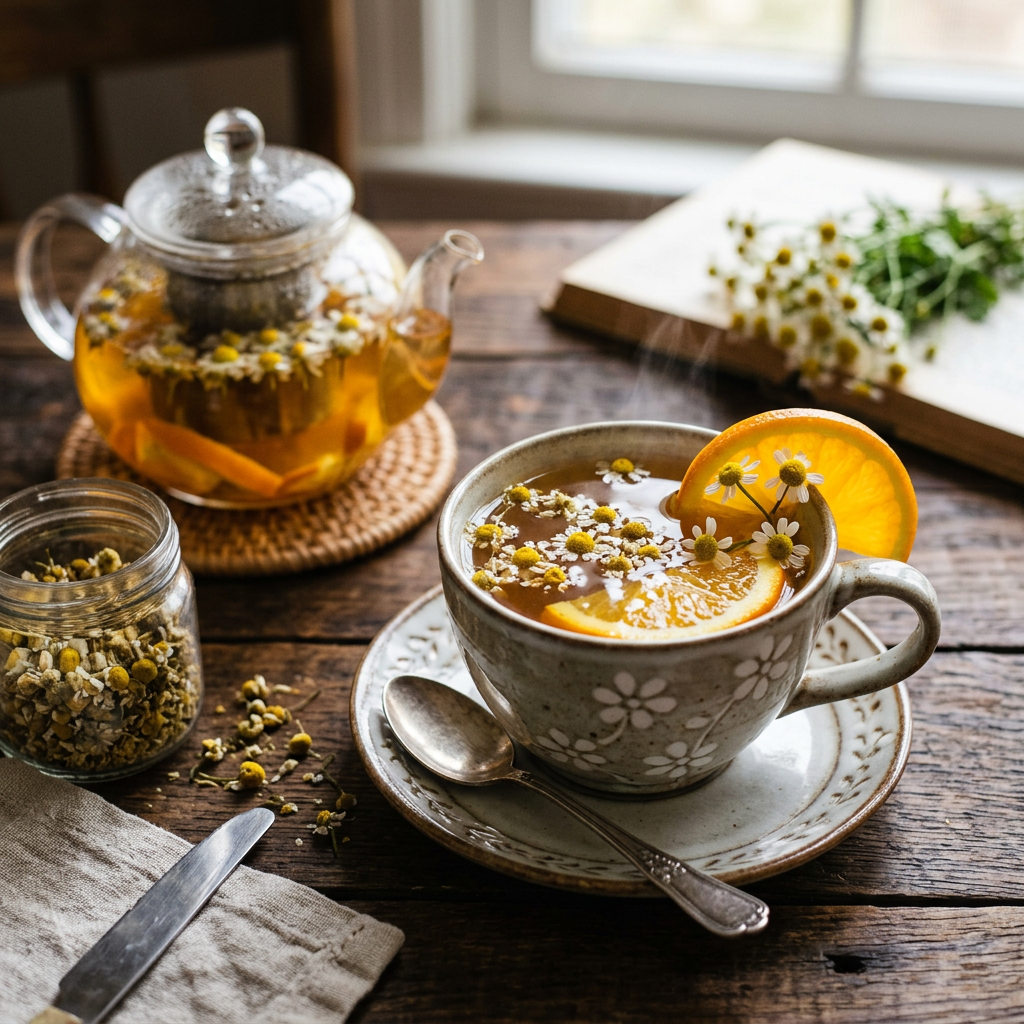
2. Chamomile Orange Tea
Chamomile and orange create a gentle, floral drink with a light citrus flavor. This is a good evening option because pure chamomile tea is generally caffeine-free.
The NCCIH chamomile fact sheet says chamomile is likely safe in amounts commonly found in tea and food. However, research has not proven that chamomile treats insomnia or other health problems.
Ingredients
- 1 chamomile tea bag or 1 teaspoon dried chamomile flowers
- 8 to 10 ounces hot water
- 1 strip of orange peel
- Optional: 1 cinnamon stick
Directions
- Add the chamomile and orange peel to a mug.
- Pour in hot water.
- Cover the mug and steep for 5 minutes.
- Remove the tea bag, flowers, and peel.
- Add a cinnamon stick if you want a warmer flavor.
Why it fits a healthy routine
A cup of chamomile tea can become part of a regular wind-down habit. You might drink it after dinner while reading, stretching, or preparing for bed.
Do not present it as a sleep treatment. The routine may feel calming, but the evidence for chamomile and insomnia remains limited.
Helpful caution
Chamomile may cause nausea, dizziness, or allergic reactions. It may also interact with warfarin, some medicines processed by the liver, sedatives, and possibly birth control pills.
Speak with a healthcare professional before using chamomile regularly if you are pregnant, breastfeeding, taking medication, or managing an estrogen-sensitive condition.
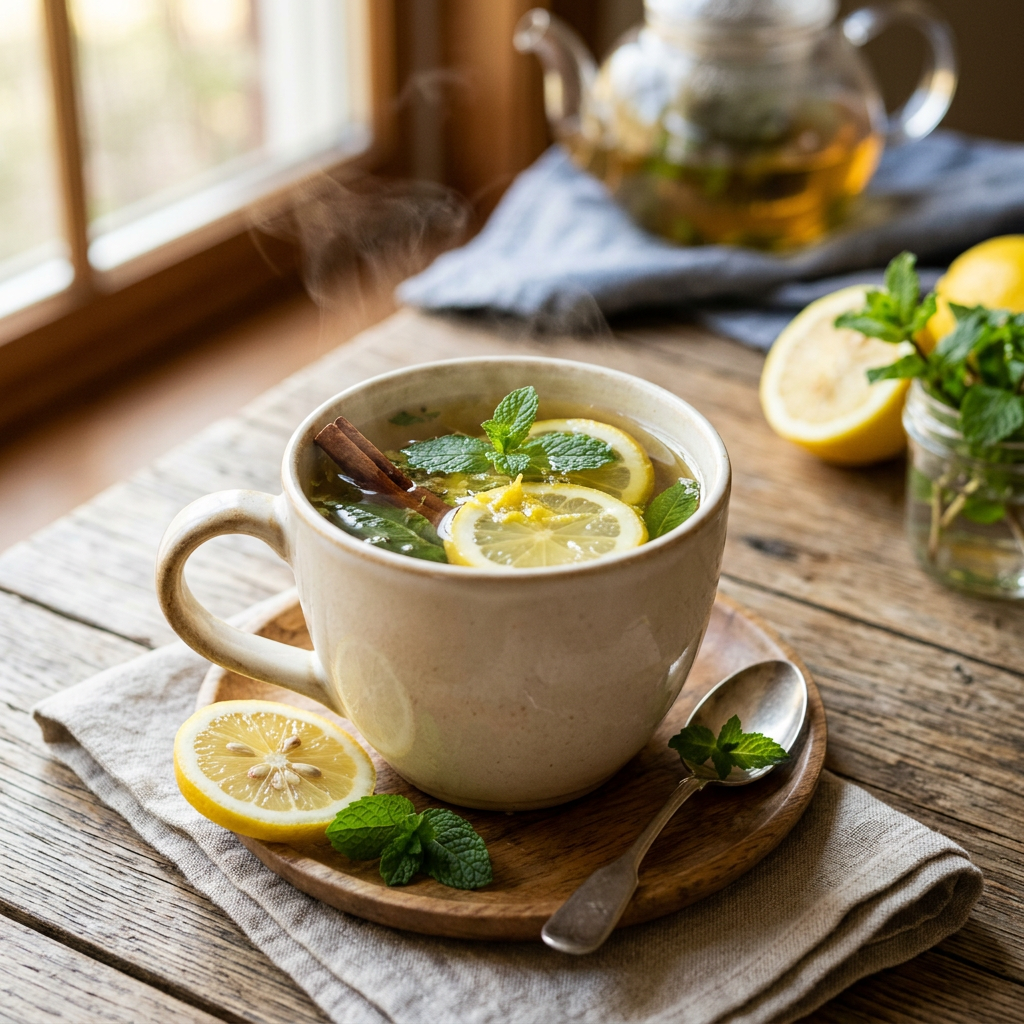
3. Peppermint Lemon Tea
Peppermint tea has a cool flavor that can be refreshing after dinner. Lemon adds acidity and helps balance the strong mint taste.
Ingredients
- 1 peppermint tea bag or 1 tablespoon fresh mint leaves
- 8 to 10 ounces hot water
- 1 teaspoon lemon juice
- Optional: 1 thin cucumber slice
Directions
- Place the peppermint tea or mint leaves in a mug.
- Add hot water.
- Steep for 5 to 7 minutes.
- Strain the leaves if needed.
- Add lemon juice.
- Add a cucumber slice for a fresher flavor.
“For more caffeine-free options, see our guide to the best caffeine-free teas for weight management.”
Why it fits a healthy routine
This recipe can replace sweet iced tea or a dessert drink. You can serve it hot or pour it over ice for a simple cold beverage.
It also gives you a way to enjoy a stronger flavor without adding sugar.
Helpful caution
Peppermint tea is not the same as peppermint oil. Concentrated peppermint oil products have different safety concerns.
Peppermint may worsen heartburn or acid reflux in some people. If mint makes your symptoms worse, choose chamomile, rooibos, or ginger-free fruit tea instead.

4. Hibiscus Berry Iced Tea
Hibiscus tea has a naturally tart flavor and a deep red color. It pairs well with berries, lemon, and orange.
Ingredients
- 1 hibiscus tea bag
- 10 ounces hot water
- 3 to 4 fresh or frozen berries
- 1 lemon slice
- Ice
- Optional: 1 teaspoon honey
Directions
- Place the hibiscus tea bag in a heat-safe glass or mug.
- Add hot water.
- Steep for 5 to 7 minutes.
- Remove the tea bag.
- Add berries and lemon.
- Let the tea cool.
- Pour it over ice.
Why it fits a healthy routine
This tea can replace bottled fruit drinks and sweetened juice. The berries add color and flavor without requiring much added sugar.
You can also prepare a larger batch and store it in the refrigerator for up to a few days. Use a clean, covered container and refrigerate it promptly.
Helpful caution
Hibiscus products vary, and research on their safety can depend on the amount and form used. If you have low blood pressure, take blood pressure medication, are pregnant, or use regular medication, ask a healthcare professional before drinking large amounts.

5. Rooibos Apple Cinnamon Tea
Rooibos has a smooth flavor that is often described as nutty or naturally sweet. It contains no natural caffeine because it does not come from the traditional tea plant.
Ingredients
- 1 rooibos tea bag
- 8 to 10 ounces hot water
- 2 thin apple slices
- 1 cinnamon stick
- Optional: a small strip of orange peel
Directions
- Add rooibos, apple slices, and cinnamon to a mug.
- Pour in hot water.
- Steep for 5 to 8 minutes.
- Remove the tea bag and cinnamon.
- Eat the apple slices if you like, or discard them.
Why it fits a healthy routine
Rooibos provides a caffeine-free alternative to black or green tea. The apple and cinnamon create a dessert-like flavor without needing syrup.
The drink is not a source of significant fiber because the apple is only steeped in the water. If you want the fiber, eat the apple instead of treating the tea as a substitute for fruit.

6. Warm Lemon Mint Tea
This is one of the simplest recipes on the list. It works well when you want a light drink without a strong herbal flavor.
Ingredients
- 5 to 6 fresh mint leaves
- 8 ounces hot water
- 1 lemon slice
- Optional: 1 teaspoon honey
Directions
- Rinse the mint leaves.
- Place them in a mug.
- Add hot water.
- Steep for 4 to 5 minutes.
- Add the lemon slice.
- Remove the leaves before drinking if you prefer a clear tea.
Why it fits a healthy routine
The recipe takes less than five minutes. That makes it easier to use regularly than a recipe that requires a blender or several specialty ingredients.
Use it as a replacement for a sweet beverage, not as a meal replacement. If you are hungry, drink the tea with a balanced snack or meal.
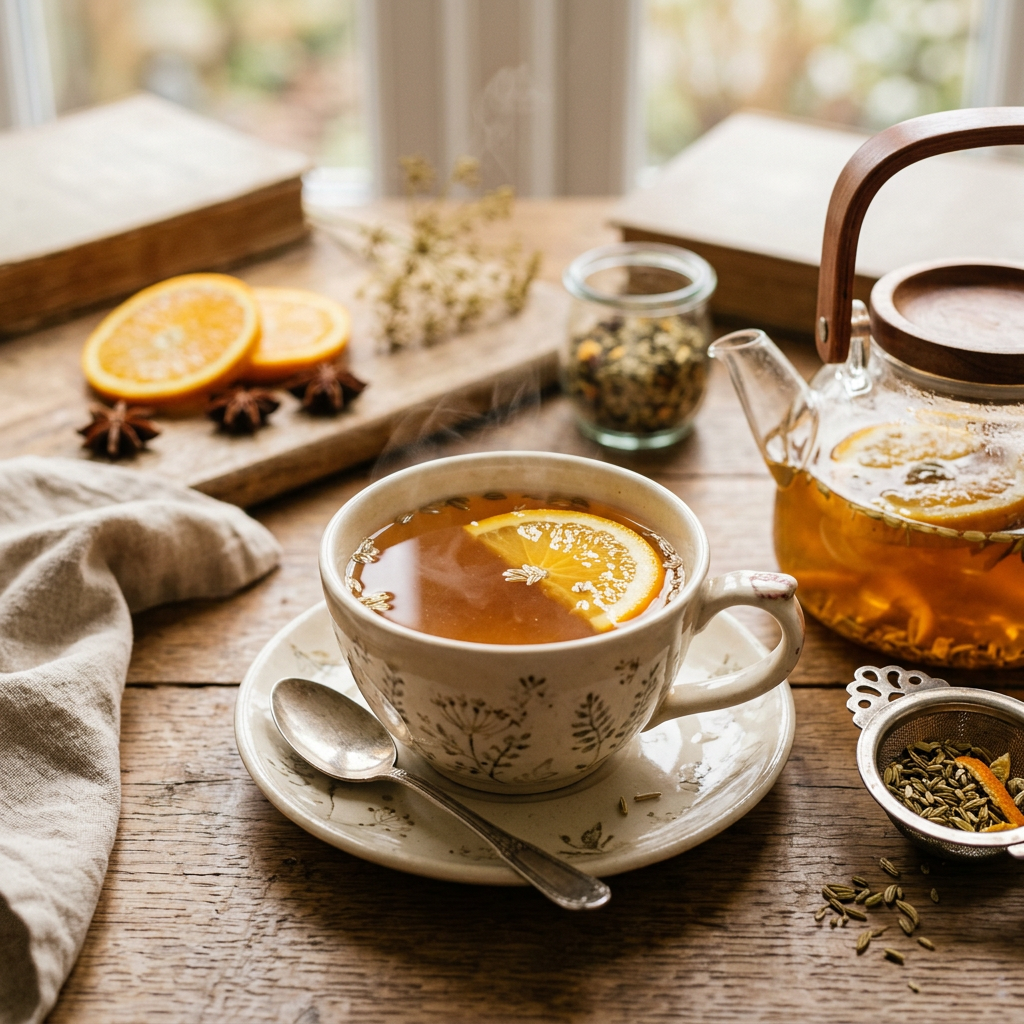
7. Fennel Orange Tea
Fennel has a mild licorice-like flavor. Orange peel makes the drink softer and more appealing if you do not enjoy strong herbal flavors.
Ingredients
- 1 teaspoon dried fennel seeds
- 1 strip of orange peel
- 8 ounces hot water
- Optional: 1 cinnamon stick
Directions
- Lightly crush the fennel seeds with the back of a spoon.
- Add them to a mug with the orange peel.
- Pour in hot water.
- Cover and steep for 7 to 10 minutes.
- Strain before drinking.
Why it fits a healthy routine
This tea gives you another caffeine-free option. Rotating flavors can keep your routine interesting and reduce the urge to buy sweetened drinks.
Helpful caution
Herbal products can affect people differently. Avoid using concentrated fennel products without professional guidance, especially if you are pregnant, breastfeeding, allergic to related plants, or taking medication.
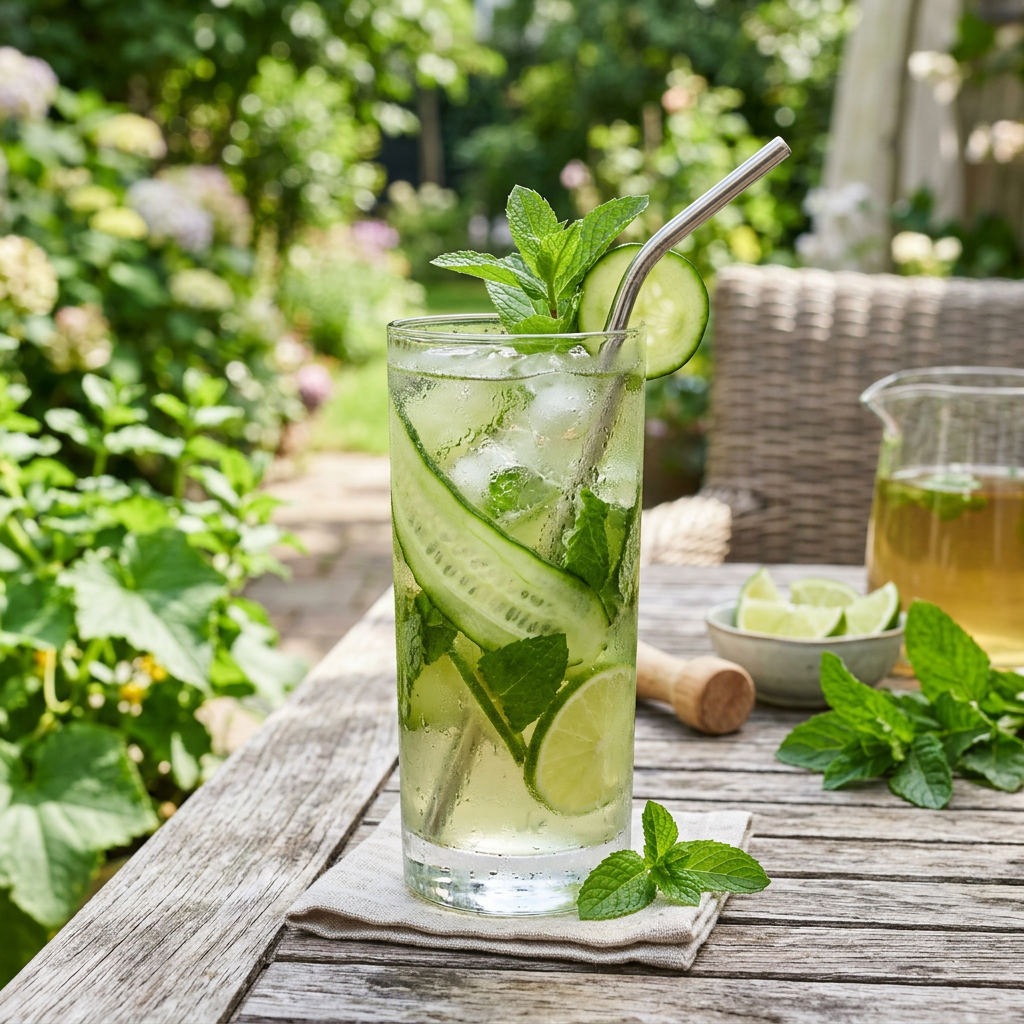
8. Cooling Cucumber Mint Tea
This recipe is ideal for hot days. It is more flavorful than plain water but still simple to prepare.
Ingredients
- 1 peppermint or spearmint tea bag
- 10 ounces hot water
- 3 cucumber slices
- 1 lemon slice
- Ice
Directions
- Brew the mint tea in hot water for 5 minutes.
- Remove the tea bag.
- Let the tea cool.
- Add cucumber and lemon.
- Pour over ice.
Why it fits a healthy routine
This recipe can help you make a pitcher of low-sugar drinks for the day. It is a useful alternative to soda, sweet tea, or flavored drinks with added sugar.
Prepare only what you can refrigerate and use within a few days. Throw it away if it develops an unusual smell, taste, or appearance.
How to Build a Herbal Tea Routine
The best routine is one you can repeat without much effort.
Morning
Choose a bright recipe such as lemon ginger or mint lemon tea. If you drink caffeinated tea or coffee, keep track of your total caffeine intake.
Afternoon
Try iced hibiscus berry tea, cucumber mint tea, or rooibos. These can replace soda or sweetened coffee drinks.
Evening
Choose chamomile, rooibos, or a simple caffeine-free blend. Avoid drinking large amounts right before bed if nighttime bathroom trips disturb your sleep.
Preparation tips
- Store tea bags and dry herbs in a cabinet.
- Make sure to wash fresh ginger, mint, fruits, and cucumbers.
- Ensure your mugs, teapots, and containers are clean.
- Put leftover iced tea in the fridge.
- Do not let tea sit out for too long.
- Know what is in your blends.
- Just because it’s natural doesn’t mean there is no danger.
How Much Sweetener Should You Use?
You do not have to avoid all sweeteners. The goal is to use them intentionally.
Try these options first:
- Cinnamon
- Lemon or lime
- Orange peel
- Fresh mint
- Ginger
- Unsweetened fruit
- A small amount of honey
If you use honey or sugar, measure it instead of pouring freely. A teaspoon is very different from several large spoonfuls.
The healthiest choice depends on your overall eating pattern. One lightly sweetened cup of tea is not a problem for most people. Drinking several large sweet teas every day can add a significant amount of sugar.
Frequently Asked Questions
Is herbal tea healthy?
Many types of herbal tea can be healthy to drink in moderation. Keep in mind that it all depends on the type and amount of herb you’re consuming. You should stick to basic varieties of tea and avoid large amounts of herbal supplements unless advised by your doctor.
Does herbal tea help you lose weight?
Herbal tea will not cause substantial weight loss. However, if you replace a higher-calorie drink such as soda or sweet tea with herbal tea, it could aid in weight loss. Many other factors contribute to weight loss, such as your diet and activity level.
Are all herbal teas caffeine-free?
Not always. Herbal teas that consist solely of herbs are typically caffeine-free. However, some blends contain green tea or other forms of tea. Make sure to check the label if you’re avoiding caffeine.
What herbal tea is best to drink before you go to bed?
Chamomile and Rooibos are popular caffeine-free teas to drink at night. You may find that drinking a cup of tea before bed helps you wind down, but don’t expect it to cure your insomnia. Avoid drinking too much liquid if it causes you to get up during the night.
Can you drink ginger tea every day?
Some individuals may not have any issues drinking a cup of ginger tea every day. Others may experience heartburn, diarrhea, or an upset stomach. Consult your doctor before drinking excessive amounts of ginger tea if you are taking any medications or are pregnant.
Does ginger tea help nausea?
Ginger may ease some types of nausea, but research often studies supplements rather than tea. It is not a proven treatment for every cause of nausea.
Does peppermint tea help with digestion?
Peppermint tea has been known to be consumed after meals. Depending on the specific digestive issue, there may be evidence to support this. Products that contain peppermint oil are different from drinking peppermint leaf tea. Peppermint can irritate some people who suffer from acid reflux.
Can you put honey in herbal tea?
You can put honey in your tea, but keep in mind it’s a form of sugar. Try to limit the amount you add to your tea. There are many other flavors you can add to your tea that don’t contain sugar.
How long does homemade iced tea last?
Make sure you store your homemade iced tea in a sealed container and keep it refrigerated. It will taste best if you drink it within a few days. Throw it out if it has a sour smell or appears to have mold on it.
Can kids drink herbal tea?
Some teas are okay for children to drink, but make sure you know what you’re giving them. Avoid herbal supplements for your child and speak with your doctor if you have any questions.
Can you drink herbal tea while pregnant?
Not all herbal teas are safe to drink while pregnant. There isn’t enough research on all types of herbal tea. Speak with your doctor about drinking herbal tea while you are pregnant.
Final Thoughts
There are many ways that herbal tea recipes can help with your healthy habits. Most of them will be low in calories (if you don’t add sugar) and are easy to create.
Use what you already know that you like. Maybe its lemon ginger in the morning, peppermint after lunch, hibiscus chilled or chamomile at night.
Understand what herbal tea can do for you. It can help you avoid drinking something with added sugars and provide some relaxation. It will not fix all of your unhealthy habits.
Know what you’re drinking by using simple ingredients. Look at labels, understand caffeine content and be careful if you’re on medications or have any medical conditions. You can start building a habit around herbal tea with no false promises.
Curious about another option? The product featured below may be worth exploring alongside the practical tips in this guide. Take a moment to review the ingredients, read the product information, and follow the instructions carefully.

