
Simple Healthy Weight Management Tips That Can Fit Your Routine
Written by Alex McKenzie
Losing weight doesn’t have to be a restrictive diet, a cost-prohibitive product line, or even an idealized schedule. Rather, the best ways to manage your weight involve developing long-term healthy habits of behavior through making small, consistent changes to your day-to-day activities.
Creating a successful (and sustainable) method of managing one’s weight involves establishing practices that will help you maintain your overall health, while avoiding those behaviors that can lead to an “all or nothing” approach to losing and maintaining weight.
For example, increasing your consumption of vegetable-based foods; taking the time to plan out what you eat; reducing the amount of sugar added to your beverage choices; regularly engaging in physical movement/ exercise; achieving adequate rest/sleep patterns; and learning effective methods to cope with setbacks (e.g. “I ate too much today – I will eat less tomorrow”).
Your objective should never be to lose weight as fast as possible. Instead, the aim should be to establish a set of routines which you believe are reasonable and achievable for the remainder of your life.
According to the Centers for Disease Control and Prevention, individuals who lose weight at a rate of approximately 1-2 pounds each week tend to retain their lost weight longer than do those who lose weight rapidly. Results may vary depending upon your current health status; prescription drugs you take; degree of physical activity; age; etc.

Key Takeaways
- Change your habits in small ways rather than attempting all at once by setting a few goals.
- Eat meals based on vegetable/fruit, whole grain, protein food, and fat sources as much as possible.
- Drink fewer sweet beverages (like soda) and drink more water, seltzer water, or unsweetened tea.
- Move regularly through both aerobic and strength training activities.
- Sleep well; when you do not get sufficient rest, it will likely disrupt eating behavior and choice, and potentially weight management.
- Do not use food diaries or weigh-in tracking as tools for punishing yourself.
- Recognize that setbacks occur; when they do, return to your routine immediately at the next meal or the next day.
- Consult with a healthcare provider if you are managing a chronic medical illness or taking medication for which you require specific diet information.
1. Start With One or Two Specific Goals
Many people begin a weight loss plan by trying to change everything at once. They cut out favorite foods, start intense workouts, prepare every meal from scratch, and set a large weight goal.
This approach may create excitement at first, but it can become difficult to maintain. A better approach is to choose one or two small actions that fit your current routine.
The CDC recommends setting goals that are specific, realistic, and short term. For example, “I will eat healthier” is difficult to measure. These goals are more specific:
- I will drink water with lunch on weekdays.
- I will walk for 15 minutes after dinner three times this week.
- I will add one vegetable to dinner four nights this week.
- I will prepare two simple lunches on Sunday.
Small goals give you a clear action to complete. They also help you learn what works in your daily life.
You can read more about realistic goals in the CDC guide, Steps for Losing Weight.
2. Build Balanced Meals Instead of Following Strict Food Rules
A healthy eating pattern does not need to remove entire food groups. It should provide foods you enjoy while helping you manage portions, hunger, and energy.
A simple way to plan a meal is to use the plate method:
- Fill about half the plate with vegetables or salad.
- Fill about one quarter with a protein food.
- Fill about one quarter with a grain, potato, or another carbohydrate.
- Add fruit, dairy, or a fortified alternative when it fits your meal.
This is not a rigid rule. It is a visual guide that can make meal planning easier.
Protein foods may include eggs, fish, chicken, lean meat, beans, lentils, tofu, Greek yogurt, cottage cheese, nuts, and seeds. High-fiber foods can also help meals feel more satisfying. Examples include vegetables, fruit, beans, lentils, oats, brown rice, and whole grain bread.
The USDA MyPlate guide provides practical information about building meals with fruits, vegetables, grains, protein foods, and dairy or fortified alternatives.
Try to focus on what you can add instead of only thinking about what you should remove. Add vegetables to pasta, fruit to breakfast, beans to soup, or a side salad to lunch. These changes can improve the overall quality of your diet without making meals feel restrictive.
You do not need every meal to be perfect. One balanced meal is a useful step, even if another meal is more convenient.
3. Reduce Sugary Drinks Without Making the Change Complicated
Sugary drinks can add a large amount of sugar and calories without making you feel full for very long. Common examples include regular soda, sweet tea, energy drinks, fruit drinks, and some flavored coffee beverages.
You do not have to stop drinking them all at once. Start with one simple change:
- Replace one sugary drink with water.
- Order a smaller size.
- Ask for less syrup in a coffee drink.
- Mix sweet tea with unsweetened tea.
- Choose sparkling water when you want something fizzy.
- Drink unsweetened tea with lemon.
If you enjoy tea, unsweetened black tea, green tea, or herbal tea can be part of a healthy routine. However, tea is not a magic weight loss product. The main benefit comes from replacing a high-sugar beverage with a lower-calorie option.
You can also keep water easier to reach. Place a reusable bottle near your desk, in your car, or beside your workout shoes. Simple changes to your environment can reduce the need to rely on willpower.

4. Plan Easy Meals Before You Become Very Hungry
Hunger, stress, and a lack of planning can make fast food or highly processed snacks feel like the only available choice. Meal planning does not need to mean preparing every meal for the entire week.
Start with one planning step. Choose your meals for the next day, or prepare two basic foods you can use in different meals.
For example, you could prepare:
- Cooked chicken, beans, or tofu
- A container of brown rice or potatoes
- Washed salad greens
- Chopped vegetables
- Hard-boiled eggs
- Oatmeal portions
- Greek yogurt and fruit
These are fast food options that may be able to be prepared in little time. A salad with chicken, a bowl of beans or vegetables served with scrambled eggs and whole grain bread could be one example.
You will also want to keep some easy to use items around as they can greatly aid in creating a meal on short notice. Canned beans, frozen vegetables, plain yogurt, rotisserie chickens, whole grain tortillas, tuna and fresh fruit can all assist in preparing a meal quickly.
It is unrealistic to expect to produce quality restaurant-style meals everyday. However, by keeping a variety of choices readily available it makes making a healthy decision more attainable when life gets hectic.
5. Choose Physical Activity You Can Repeat
Exercise can support healthy weight loss, heart health, strength, mood, and daily function. You do not need to start with intense workouts.
The Physical Activity Guidelines for Americans recommend that adults work toward at least 150 minutes of moderate-intensity aerobic activity each week. Brisk walking, dancing, cycling, and water aerobics are examples of moderate activity for many people.
Adults should also include muscle-strengthening activity on at least two days each week. This may include bodyweight exercises, resistance bands, weight machines, or light dumbbells.
If you are currently inactive, start below the full recommendation. A 10-minute walk is still a useful beginning. You can gradually add time as your fitness improves.
Try connecting movement to something you already do:
- Take short walks after your morning meal (breakfast) and in the afternoon before supper (dinner).
- Take a few minutes to walk outside at some point during the day for a “walking break”.
- When you feel comfortable with the number of people around you, use the staircase instead of an elevator.
- Stretch lightly while sitting on the couch and watching TV.
- Park in a parking spot that is farther away than normal when you arrive.
- Do simple muscle-building exercises two times per week.
Choose activities that you do not strongly dislike. A moderate routine you can repeat is usually more useful than an intense routine you stop after two weeks.
If you have heart disease, joint problems, diabetes, severe obesity, or another medical condition, ask a health professional how to begin safely.
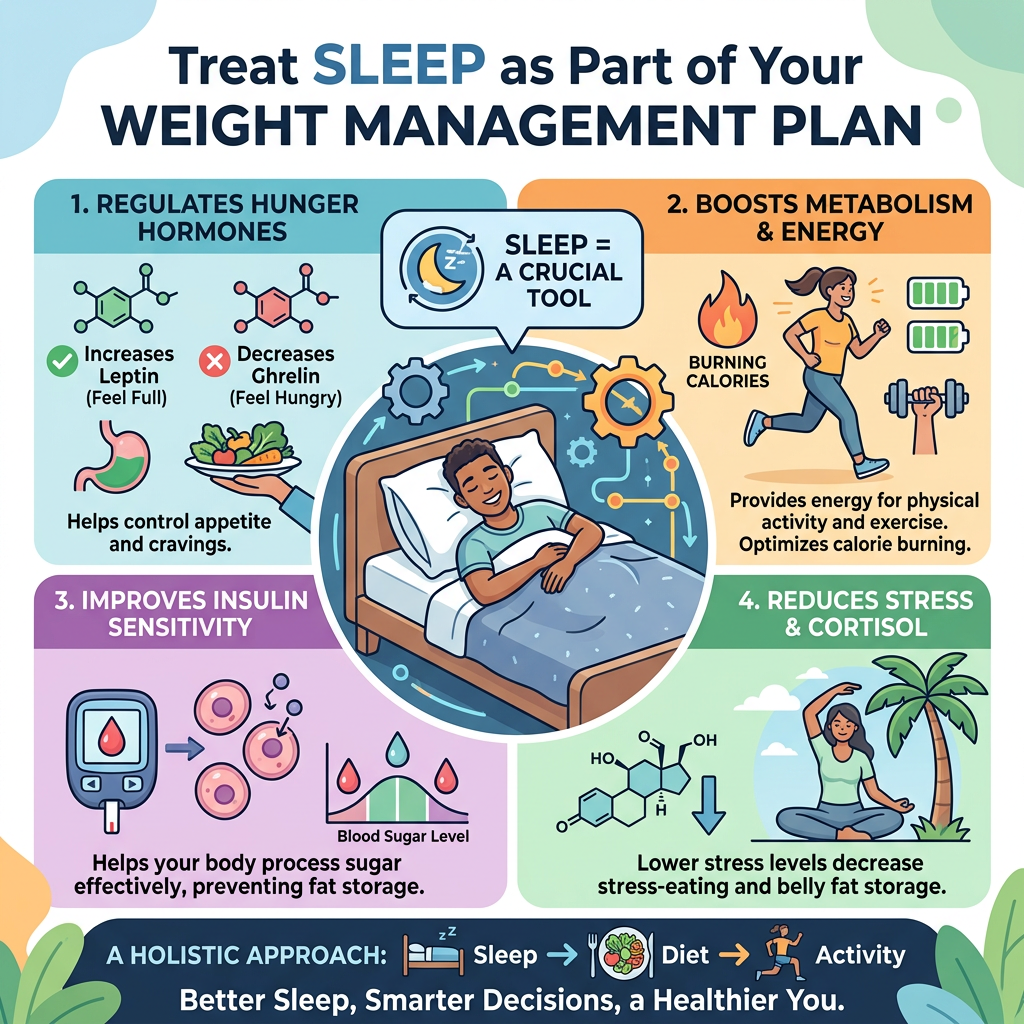
6. Treat Sleep as Part of Your Weight Management Plan
Sleep is often overlooked when people search for tips to lose weight. Yet sleep affects energy, hunger, mood, and food choices.
An NIH guide from the National Institute of Diabetes and Digestive and Kidney Diseases says that adults ages 18 to 64 generally need 7 to 9 hours of sleep each night. Adults age 65 and older generally need 7 to 8 hours.
The same guide explains that not getting enough sleep is linked to weight gain. Lack of sleep may also increase hunger, lead to more calories consumed, and make less nutritious food choices more likely.
You can support better sleep by:
- Keeping a regular sleeping schedule and wake up at the same time.
- Your bedroom should be as dark and quiet as possible to help you fall asleep better. Your bedroom should also feel as comfortable as possible.
- Using bright screens (phones/tablets/computers) for an extended period of time is often counterproductive in helping you fall asleep. It would be best to avoid using bright screens in the hour leading up to sleep.
- It is generally good to avoid eating large meals close to the time that you will lie down to go to sleep.
- Caffeine can interfere with sleep. Limiting caffeine intake as much as possible in the hours leading up to going to bed.
- A short relaxing activity before going to sleep is recommended.
You do not need to fix your sleep schedule perfectly. Try going to bed 15 or 20 minutes earlier, then adjust gradually.
7. Track Patterns Without Judging Yourself
Tracking can help you understand your habits. It should not become a way to criticize yourself.
You might track food, drinks, activity, sleep, hunger, mood, or body weight. You do not need to record everything forever. A short period of tracking can show patterns that are easy to miss.
For example, you may notice that:
- You skip lunch and overeat in the evening.
- You snack more after poor sleep.
- You drink more sugary beverages at work.
- You feel better on days when you walk.
- You eat quickly when you are stressed.
Use this information to make one practical adjustment. If you skip lunch, prepare a simple option in advance. If stress leads to evening snacking, plan a snack and a nonfood activity, such as a shower, walk, phone call, or relaxing routine.
The CDC also recommends monitoring progress as part of weight management. You can learn more from Tips for Keeping Weight Off.
A weekly weigh-in may help some people, but it is not required. Weight naturally changes because of water, sodium, digestion, hormones, and other factors. Look at trends rather than reacting to one number.
8. Plan for Setbacks Before They Happen
A setback does not erase your progress. Travel, holidays, stress, illness, celebrations, and busy work periods can all affect your routine.
Instead of expecting perfect consistency, decide what you will do when life becomes difficult.
For example:
- If you miss a workout, do some light walking the next day.
- When you have eaten a lot in one sitting; go back to your regular mealtime schedule at the next meal time.
- If you are unable to prepare meals for yourself, try to find easy-to-prepare foods that contain protein, veggies and a whole grain.
- If the stresses of everyday life affect your food choices; write down what has occurred (and why) but don’t be critical of yourself.
Avoid the “I already ruined everything” mindset. One meal or one day does not determine your results. The next reasonable choice still matters.
The NIDDK explains that behavior change often happens in stages. People may move from thinking about change to preparing, taking action, and maintaining the habit. Setbacks are a normal part of learning what works.
You can read more in the NIDDK guide, Changing Your Habits for Better Health.
A Simple Weekly Plan
Here is one example of how to put these healthy weight management tips together:
Monday: Take a 15 minute walk after lunch. Make sure to drink enough water at lunch time.
Tuesday: Complete a quick (10-30 min) strength workout. Include veggies in your evening meal.
Wednesday: Plan out two meals for tomorrow. Try to get to bed a little earlier tonight than usual.
Thursday: Instead of having a soda, have a glass of water or unsweetened tea.
Friday: Go on a 20 minute walk. Or try something else that you like to do.
Saturday: Buy or prepare for the week: one veggie; one source of protein.
Sunday: Look back over last weeks routines. Choose ONE thing to work on this week.
This is only a sample. You can change the days, foods, and activities to match your needs.
When to Ask for Professional Support
Consider speaking with a doctor, registered dietitian, or qualified health professional if you have diabetes, high blood pressure, heart disease, kidney disease, an eating disorder, or another health condition.
You should also ask for guidance if you take medication, are pregnant or breastfeeding, have a history of disordered eating, or feel unsure about safe exercise.
A professional can help you choose realistic goals and identify factors that may affect your weight, hunger, sleep, or energy.
Frequently Asked Questions
What are the best weight management tips for beginners?
Start with one or two habits you want to develop. For example, cut back on sugary drinks; add veggies to a single meal; walk for ten to fifteen minutes; and establish a routine (e.g., go to bed each night at the same time). It is easier to continue small habits as opposed to adopting an entirely new way of life.
How fast should healthy weight loss happen?
According to the CDC, slow weight loss (about 1-2 lbs/week) is most likely to be sustained compared to fast weight loss. In addition, everyone loses differently. Some may take longer to lose weight based upon their ability to make long-term changes.
Do I need to count calories to lose weight?
No. There are many different methods to use in place of calorie counting. Some people have used portion control and/or the “plate” as a way to gauge their portions. Others will plan out each day’s meals prior to going shopping and prepare them at home. Many people simply listen to their body and eat until they feel full (and stop eating). Ultimately, there is no right or wrong method – find what works best for YOU – just don’t create unnecessary stress over food.
Is walking enough for weight management?
Walking is a great exercise that may aid in improving your overall fitness level. Walking is also a good way to aid in weight loss/weight management by increasing how much energy/calories you burn daily. A good starting point would be walking at least 10 minutes per day and gradually increase the time. For optimal health, try adding strength training and other forms of exercises into your routine.
Can I eat snacks and still lose weight?
Yes. Snacking fits into a healthy dietary plan as long as you select portion sizes that meet your hunger and select foods with high levels of either protein or fiber, or better yet, both. Examples are; sliced apples and peanut butter, sliced veggies and hummus, etc.
What should I do if I regain weight?
Do not severely restrict yourself or punish yourself. Identify what changes were made to your routine and make one small change back to your original routine. A person’s weight may vary from day to day so, evaluate your overall progress over time rather than just focusing on one single weigh in.
Final Thoughts
Simple and healthy tips for managing your weight are best when they make sense in your daily life. You don’t have to eat perfectly all of the time or exercise until exhaustion each day.
Start by having one specific objective. Develop well-balanced meals. Consume less sugared drinks. Move often. Support your sleep. Be curious while tracking the pattern of what happens when you experience an obstacle. When you fall off track get back on course without quitting.
Healthy weight loss has nothing to do with finding a short cut to success. Healthy weight loss has everything to do with developing good habits which will support your overall health and which you will be able to maintain long-term.
Enjoy a refreshing cup of All Day Slimming Tea as a simple addition to your daily weight loss and wellness routine.

Affiliate Disclosure
Some links on Weight Loss Tea Guide are affiliate links. If you buy something after clicking one of these links, we may earn a commission at no extra cost to you.
We only recommend products and resources we believe may be useful to our readers. Affiliate relationships do not affect our editorial opinions or product evaluations. Always check product labels and speak with a qualified health professional before using weight loss teas, supplements, or products that may affect your health.

4 thoughts on “Simple Healthy Weight Management Tips That Can Fit Your Routine”