
Low-Calorie Tea Recipes: 8 Simple Drinks Without Added Sugar
Written by Alex McKenzie
Tea may be an extremely low calorie drink; however, it’s the addition of ingredients after the tea has brewed which changes its nutritional value. Ingredients such as sugar, honey, flavored syrups, cream and large quantities of milk can convert a low calorie drink to a high calorie drink.
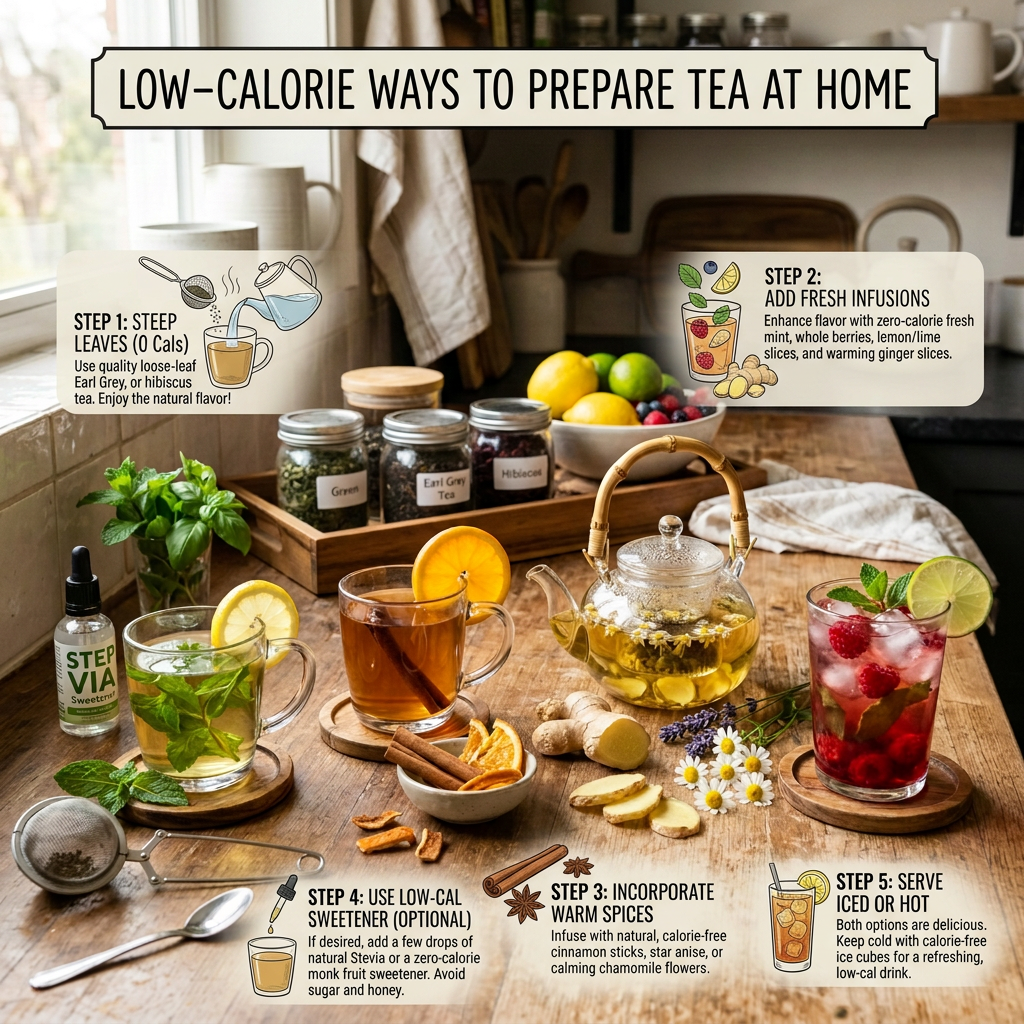
These recipes use unsweetened tea, fruit, herbs, and spices to add flavor without relying on added sugar. They are not fat-burning drinks, but replacing a sugary beverage with unsweetened tea may help reduce calorie intake over time. Your overall eating pattern, activity level, sleep, and health history matter more than any single drink.
In this article, we will provide information on Low calorie ways to prepare tea at home. The information contained within this article contains both hot tea ideas, Iced tea recipes, Simple flavor combinations, Tips for choosing packaged tea and what low-calorie tea can and cannot do in regards to weight loss.
If you are interested in the possible benefits of tea, learn more about whether tea can help with weight loss.
Key takeaways
- Plain brewed tea tends to be extremely low calorie. The U.S. Department of Agriculture (USDA) lists unsweetened tea as zero calories for each 12 ounce serving.
- Additives such as sugar, honey, syrups, cream, and large quantities of milk will greatly increase the number of calories that can be added to tea.
- Flavor additives such as fresh lemons, limes, mint, ginger, cinnamon and fruits tend to have minimal caloric impact.
- Recipes can include green, black, white, oolong, herbal and rooibos tea types and other ingredients to create a recipe with a lower caloric content than sweetened bottled tea.
- Homemade unsweetened tea has less calories than many sweetened bottled tea options.
- While there is no evidence to suggest that tea by itself causes significant weight loss, using tea as part of an overall strategy to limit your caloric intake while replacing higher-calorie beverages like soda is beneficial.
- There are varying levels of caffeine found in different tea varieties; therefore consider this when determining whether you are consuming too much caffeine and should adjust accordingly.
How many calories are in plain tea?
Plain brewed black tea and green tea contain very few calories. The exact amount depends on the tea, serving size, brewing method, and database used.
The Dietary Guidelines for Americans beverage table lists unsweetened tea as having zero calories and zero added sugars in a 12-ounce serving. Some USDA FoodData Central entries show a small amount, such as one to three calories, because of differences in serving size and rounding.
For practical purposes, plain brewed tea is often considered a tea with zero calories or a nearly calorie-free drink.
The important difference is what you add to the tea. For a full walkthrough of keeping those add-ins low calorie, see how to drink tea without adding extra calories.
| Ingredient | Approximate calories |
|---|---|
| Plain brewed tea | 0 to 3 calories |
| 1 teaspoon granulated sugar | About 16 calories |
| 1 tablespoon honey | About 64 calories |
| 2 tablespoons milk | Depends on the type |
| Flavored syrup | Depends on the brand and amount |
| Lemon or lime juice | Usually only a few calories |
| Fresh mint, ginger, or cinnamon | Very few calories in normal amounts |
These numbers are estimates. Always check the label for packaged ingredients.
The FDA explains that added sugars include sugar, syrups, and honey. Honey may sound more natural than table sugar, but it still contributes added sugar and calories.
What are the best low-calorie teas?
The best low-calorie tea is usually the one you enjoy without adding large amounts of sugar or cream. Different types of tea offer different flavors, so you can choose based on taste and caffeine preference.
Green tea
Green tea has a fresh, grassy, or slightly bitter flavor. It works well with lemon, lime, mint, ginger, cucumber, and berries.
Green tea contains caffeine unless you buy a decaffeinated variety. Avoid overbrewing it if you dislike bitterness. A shorter brewing time and slightly cooler water can create a smoother cup.
Black tea
Black tea has a stronger flavor than green tea. It works well hot or iced, with citrus, cinnamon, ginger, or a small amount of milk.
Black tea is a good choice when you want a fuller flavor without adding sweetener. Earl Grey, English breakfast, Darjeeling, and Assam teas can all work in low-calorie recipes.
White tea
White tea has a light flavor and can taste slightly floral or sweet. It is easy to pair with cucumber, peach, berries, lemon, and mint.
Because the flavor is delicate, use fresh ingredients sparingly. Too much citrus or ginger can overpower the tea.
Oolong tea
Oolong tea falls between green and black tea in flavor. Some varieties taste floral, while others taste roasted or nutty.
Oolong tea works well with orange peel, cinnamon, ginger, and chilled water.
Herbal tea and rooibos
Herbal teas are technically infusions rather than true teas, but they are often included in the tea category. Peppermint, hibiscus, chamomile, rosehip, and ginger infusions can add flavor without many calories.
Rooibos is naturally caffeine-free and has a mild, earthy flavor. It can work well as a base for vanilla, cinnamon, berries, or a small amount of milk.

8 Low Calorie Ways to Prepare Tea
These low calorie tea recipes use simple ingredients. The calorie content will vary based on the amount of fruit juice, milk, or other ingredients you use.
1. Lemon mint green tea
This is a simple hot or iced tea that uses citrus and mint for flavor.
Ingredients
- 1 green tea bag or 1 teaspoon loose-leaf green tea
- 8 to 12 ounces hot water
- 1 lemon wedge
- 4 to 6 fresh mint leaves
- Ice, if serving cold
Instructions
- Brew the green tea according to the package instructions.
- Add the mint leaves while the tea is hot.
- Let the tea cool for a few minutes.
- Add lemon juice and serve hot, or pour it over ice.
Avoid squeezing in a large amount of lemon juice if you want to keep the calories as low as possible. A wedge or two adds flavor without much energy.
2. Ginger lemon black tea
Ginger gives black tea a warm, sharp flavor. Lemon adds brightness without the need for sugar.
Ingredients
- 1 black tea bag
- 8 to 12 ounces hot water
- 2 or 3 thin slices of fresh ginger
- 1 lemon wedge
- Optional cinnamon stick
Instructions
- Add the ginger to a mug.
- Pour in hot water and let it sit for two to three minutes.
- Add the black tea and steep according to the package directions.
- Remove the tea bag and add lemon juice.
- Add a cinnamon stick if you want a warmer flavor.
If the tea tastes bitter, try brewing it for less time. Adding more sugar is not the only way to improve the flavor.
3. Low-calorie iced tea recipe with citrus
This low calorie iced tea recipe is useful when you want a cold drink that tastes more interesting than plain water.
Ingredients
- 2 black or green tea bags
- 16 ounces hot water
- 16 ounces cold water
- Lemon, lime, or orange slices
- Ice
- Fresh mint, optional
Instructions
- Brew the tea bags in 16 ounces of hot water.
- Steep according to the package directions.
- Remove the tea bags and allow the tea to cool.
- Add the cold water and citrus slices.
- Serve over ice.
Use citrus slices instead of a large amount of juice. The slices add aroma and a small amount of flavor while keeping the drink light.
4. Hibiscus berry tea cooler
Hibiscus tea has a bright, tart flavor that can make an iced drink taste bold without added sugar.
Ingredients
- 1 or 2 hibiscus tea bags
- 12 ounces hot water
- A few fresh or frozen berries
- Ice
- A squeeze of lime, optional
Instructions
- Brew the hibiscus tea in hot water.
- Let it cool completely.
- Add berries and pour the tea over ice.
- Add a small squeeze of lime if desired.
You can leave the berries in the glass for flavor or strain them out after steeping. Eating the berries will add more calories than simply using them for infusion.
Hibiscus tea can be tart. If you need sweetness, start with a very small amount of sweetener and taste the drink before adding more.
5. Cucumber mint white tea
This is a light, refreshing option for people who prefer delicate flavors.
Ingredients
- 1 white tea bag
- 8 to 12 ounces hot water
- 3 cucumber slices
- 4 mint leaves
- Ice
- A small lemon wedge, optional
Instructions
- Brew the white tea with hot water.
- Let the tea cool.
- Add cucumber and mint.
- Pour over ice and add lemon if desired.
Cucumber and mint provide flavor without the heavy taste of syrup or sweetened drink mixes.
6. Cinnamon vanilla rooibos
Rooibos gives this drink a naturally mild and slightly sweet flavor. It is also caffeine-free.
Ingredients
- 1 rooibos tea bag
- 8 to 12 ounces hot water
- 1 cinnamon stick
- A small splash of vanilla extract
- Optional 1 to 2 tablespoons unsweetened milk
Instructions
- Brew the rooibos with the cinnamon stick.
- Remove the tea bag after the recommended steeping time.
- Add a small splash of vanilla extract.
- Add a small amount of milk if you prefer a creamier drink.
Use vanilla extract rather than vanilla syrup. Syrups usually contain added sugar and can add more calories than expected.
7. Light milk tea
You can still enjoy a creamy tea without adding a large amount of cream or sweetener. The key is to use a measured portion.
Ingredients
- 1 black tea bag
- 8 ounces hot water
- 1 to 2 tablespoons milk or an unsweetened milk alternative
- Cinnamon or nutmeg, optional
Instructions
- Brew the black tea in hot water.
- Add the milk and stir.
- Finish with cinnamon or nutmeg.
The calorie total depends on the milk. Unsweetened milk alternatives may contain fewer calories than whole milk or cream, but brands vary. Check the Nutrition Facts label.
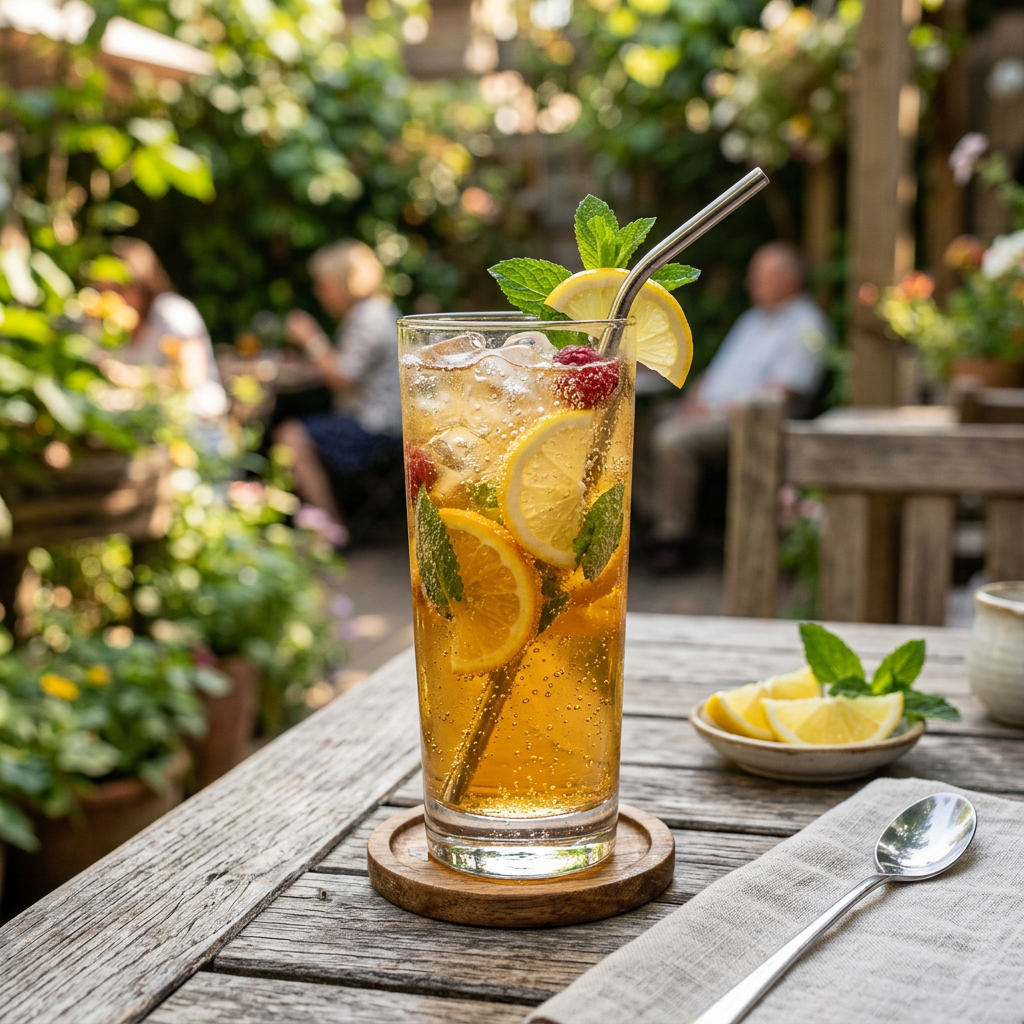
8. Tea and sparkling water spritzer
A tea spritzer adds volume and fizz without using soda or sweetened mixers.
Ingredients
- 4 ounces strongly brewed green, black, or herbal tea
- 4 to 6 ounces plain sparkling water
- Lime or lemon wedge
- Ice
- Fresh herbs, optional
Instructions
- Brew the tea and allow it to cool.
- Fill a glass with ice.
- Add the tea and sparkling water.
- Finish with lime, lemon, mint, or basil.
Use plain sparkling water instead of tonic water. Tonic water often contains added sugar.
How to make tea taste sweet without sugar
You may not need a sweetener if you change the tea or preparation method.
Try these options:
- Start by choosing low-caffeine (naturally “mild”) teas, like White Tea or Rooibos.
- You can add Cinnamon, Vanilla Extract, Ginger, Mint or Citrus Peel to your tea.
- The slices of fruits will provide an aromatic sensation and will also give a subtle flavor to your tea.
- If you are brewing Green Tea, brew it using slightly cooler water than what is recommended in order to lessen the bitterness.
- Do not over-steep your tea, because this will make it very strong and possibly too bitter.
- Drinking Iced Tea might be easier on your palate since many people believe that iced tea tastes less bitter than hot brewed tea.
- Adding just a little bit of Milk may help soften the texture of the tea.
- Consider trying one of the naturally flavored teas available which does not contain any added sugar.
- Instead of immediately removing the sugar from your diet, try reducing the sugar in your tea gradually.
Artificial or low-calorie sweeteners may reduce calories compared with sugar, but they are not required for a good cup of tea. If you use a sweetener, check the product label and use the smallest amount that gives you the taste you want. Sugar, honey, syrups, and cream can quickly add calories. See these tea ingredients to avoid for more guidance.
Low calorie tea for weight loss: what to know
People often search for low calorie tea for weight loss, but tea should not be treated as a weight-loss treatment.
Plain tea can be useful because it may replace higher-calorie drinks. For example, replacing a sugary tea, soda, or large café drink with unsweetened iced tea can lower daily calorie intake. That change may support weight management over time.
However, drinking green tea does not cancel out a high-calorie diet. The National Center for Complementary and Integrative Health says green tea has not been shown to produce meaningful weight loss. Some research suggests green tea compounds may have a modest effect, but the results are not strong enough to treat tea as a weight-loss solution.
Be especially careful with green tea extract pills and weight-loss products. Brewed green tea is different from concentrated supplements. NCCIH reports that green tea extract products have been linked to rare cases of liver injury.
A better approach is to use plain tea as one part of a balanced eating pattern. It can provide a flavorful alternative to sugary drinks, but it cannot replace nutritious meals, regular movement, sleep, or medical care.
How to keep homemade tea low in calories
A few preparation habits can make a major difference.
Measure sweeteners
A quick pour of honey or syrup can become several teaspoons. Use a measuring spoon when you are testing a recipe. This helps you understand how much you are adding.
Watch flavored creamers
Flavored creamers may contain added sugar and can add more calories than a small amount of regular milk. Read the label before using them every day.
Choose unsweetened packaged tea
Bottled tea can look similar to homemade iced tea, but the nutrition may be very different. Look for labels that say:
- Unsweetened
- No added sugar
- Zero grams of added sugar
Check the serving size. A bottle may contain more than one serving.
Compare restaurant drinks
Tea-based café drinks may include sweetened milk, syrups, whipped cream, or toppings. Ask what ingredients are included and whether the drink can be made with unsweetened tea and less syrup.
The USDA MyPlate beverage guidance recommends choosing water and limiting sugary beverages. Unsweetened tea can fit into that approach.
Caffeine and tea safety
Tea can contain caffeine, although the amount varies by tea type, brand, serving size, and brewing time.
The FDA states that up to 400 milligrams of caffeine per day is not generally associated with negative effects for most healthy adults. Individual tolerance varies. Too much caffeine may contribute to restlessness, a fast heartbeat, headaches, or trouble sleeping.
Choose decaffeinated or caffeine-free herbal tea if you are sensitive to caffeine. If you are pregnant, breastfeeding, taking medication, or managing a health condition, ask a healthcare professional how much caffeine is appropriate for you.
Lemon, lime, and other acidic ingredients may bother people with acid reflux. If a tea causes burning, stomach pain, or other symptoms, stop using that ingredient and discuss persistent symptoms with a healthcare professional.
Herbal products are not automatically risk-free. Some herbs can interact with medicines or may not be appropriate during pregnancy. Read the ingredient list carefully, avoid concentrated extracts unless a qualified professional recommends them, and ask for individual advice when needed.
Frequently asked questions
What is the best low-calorie tea?
Low calorie ways to prepare tea is usually plain brewed tea without sugar, syrup, or large amounts of cream. Green tea, black tea, white tea, oolong tea, rooibos, and herbal infusions can all be low-calorie choices.
Your best option depends on flavor and caffeine preference. If you want a caffeine-free option, try rooibos, peppermint, chamomile, or hibiscus.
Is calorie-free tea really calorie-free?
Plain tea is often listed as zero calories because the amount is so small that it rounds down on the label. Some nutrition databases list one to three calories per serving.
Once you add sugar, honey, milk, cream, or syrup, the drink is no longer calorie-free. Always count those additions.
Is honey healthier than sugar in tea?
Honey and table sugar have different flavors, but both add sugar and calories. The FDA includes honey among added sugars. One tablespoon of honey contains about 64 calories, while one teaspoon of table sugar contains about 16 calories.
If you prefer honey, use a small measured amount rather than assuming it is calorie-free.
Is iced tea low in calories?
Unsweetened iced tea is usually very low in calories. Sweetened iced tea can contain much more, especially when made with sugar, syrup, or sweetened fruit juice.
For the lowest-calorie option, brew tea at home and add lemon, lime, mint, cucumber, or berries for flavor.
Can low-calorie tea help you lose weight?
Low-calorie tea may help if it replaces sugary drinks or high-calorie café beverages. That can reduce overall calorie intake.
Tea itself does not cause meaningful weight loss. Green tea supplements and concentrated extracts should not be used as a substitute for evidence-based weight management.
What can I add to tea without adding many calories?
Good options include lemon, lime, mint, ginger, cinnamon, cucumber, fresh herbs, tea spices, and a small amount of fruit. You can also use a measured splash of unsweetened milk or a low-calorie milk alternative.
Check packaged ingredients because flavored syrups, creamers, and sweetened milk can add more calories than expected.
Final thoughts
Low calorie ways to prepare tea does not have to be plain or boring. The simplest way to prepare flavorful tea is to begin with a tea that you already enjoy, and then include additional flavors such as citrus, herbs, spices, cucumber or fruit.
Brewed tea is typically quite low in calories by nature of its preparation. Most changes occur when reducing the amounts of sugar, honey, syrup, cream and sweetened milk that you add to your tea. While using tea as an alternative to higher caloric beverages can help support weight management, do not rely on it as a separate item specifically designed to promote weight loss.
Make All Day Slimming Tea part of your daily routine and enjoy a flavorful way to support your weight loss and wellness goals.

Helpful sources
- USDA FoodData Central
- FDA: Added Sugars on the Nutrition Facts Label
- FDA: How Much Caffeine Is Too Much?
- NCCIH: Green Tea, Usefulness and Safety
- USDA MyPlate Beverage Guidance
- American Heart Association: Added Sugars
Affiliate Disclosure: Some links on this page may be affiliate links. If you purchase something through one of these links, we may earn a small commission at no extra cost to you. We only recommend products and services we believe may be useful to our readers. Our opinions remain our own, and affiliate partnerships do not affect our reviews or recommendations.

5 thoughts on “Low-Calorie Tea Recipes: 8 Simple Drinks Without Added Sugar”