
Does Tea Cause Kidney Stones? What Matcha Drinkers Should Know
Does tea cause kidney stones? No current evidence suggests tea will give you stones. There are oxalates in tea, which may be concerning for those who get calcium oxalate stones. Large observational studies have associated tea with fewer stones. We cannot say tea will help prevent stones, and these studies do not look at how it affects matcha consumers. It depends on your type of stone, labs, and medical history.
There are many reasons why you should or shouldn’t drink tea. If you love tea, it can be confusing to navigate oxalate content. Below, I will share what research has shown with black tea, green tea, and matcha/café-style drinks; why we cannot extrapolate brewed tea to matcha; and what you should ask your provider if you are a stone former.
The short answer: Tea will not give you stones, and there is no evidence to suggest it will prevent stones when consuming matcha. It depends on your type of stone, labs, and medical history.
I think it’s interesting how something can become so broad when looking at one factor, such as tea having oxalates in it. Research shows that there is some truth to tea affecting your stones, but it’s not all-encompassing.
This article is for general information, not medical advice. Kidney-stone guidance depends on your stone type, health history, and test results. Talk with your healthcare professional before changing your tea, calcium, or oxalate intake, especially if you’ve had kidney stones.
Key Takeaways
- There is oxalate in tea, but it will depend on what tea you drink and how you prepare it.
- Studies about tea and kidney stones do not say that tea will cause or prevent kidney stones.
- Based on the information below, we cannot determine if matcha has a high amount of oxalate in it or will increase your chances of kidney stones.
- Knowing what kind of kidney stone you have can give you insight into what foods you should or should not avoid.
What is the link between tea and kidney stones?
There are many things that can cause you to get kidney stones. If you have too much of a certain substance in your urine, it can lead to stones forming. Calcium oxalate is one type of kidney stone. As you know, oxalate can be found in many foods and beverages.
Just because something has oxalate in it does not mean you will develop kidney stones from drinking or eating it. Many things can play a role in you developing kidney stones. How much water you drink, the type of kidney stone you make, and other factors can all play a role.
If you make calcium oxalate kidney stones, you may be told to look at your oxalate intake. But this isn’t the case for all types of kidney stones. And just because you have calcium oxalate stones doesn’t mean you need to cut out all foods that contain oxalate.
Want to learn more about why you shouldn’t drink too much tea? read our guide to tea risks, side effects, and safety.
Does Tea Cause Kidney Stones? What Research Says
There isn’t a clear yes or no to this question. There are studies that have tested how much oxalate is in tea. There are also studies that see if people who drink tea develop kidney stones.
Tea-drinking studies show associations, not proof
In the article “Diet and Stone Disease in 2022,” several articles mention how drinking tea can reduce your risk of developing kidney stones. Three cohorts that took place in the United States showed that drinking at least 1 cup of tea (8 oz) can decrease your risk by 8%-14%.
A study that was done in the UK also showed that if you drink tea, you have a lower risk of developing new kidney stones. It stated that for every 200 ml of tea you drank per day, your hazard ratio was .95. Just because you drink tea doesn’t mean you will reduce your risk by 5%.
Another meta-analysis looked at observational studies that included dose response. When comparing 1-2 cups of tea to 0 cups of tea, there was no significance in developing kidney stones. But when doing a dose-response analysis, it showed that the more tea you drink, the less risk you have of developing kidney stones. It stated that for every 110 ml of tea you drink, your relative risk was .96.
So drinking tea can’t be used to prevent you from getting kidney stones. People that drink tea may have other factors that decrease their risk of developing kidney stones as well.
The 2022 review discusses other small studies
One study mentioned in the article was looking at women that had elevated levels of calcium in their urine. Of those women that had calcium oxalate monohydrate kidney stones, 0% drank green tea, and 42% didn’t drink any tea. While this may seem like it could prevent you from developing kidney stones, it was not a clinical trial, so we can’t use this information to tell everyone that green tea can prevent you from getting kidney stones.
There was another study that was done on men that drank 1.5 L of black tea per day. They had higher levels of citrate in their urine than those that drank fruit tea with no oxalate in it. Again, this just shows a number in their urine, not that they developed fewer kidney stones.
So there are many factors that can play into whether you develop kidney stones or not.
How much oxalate is in tea?
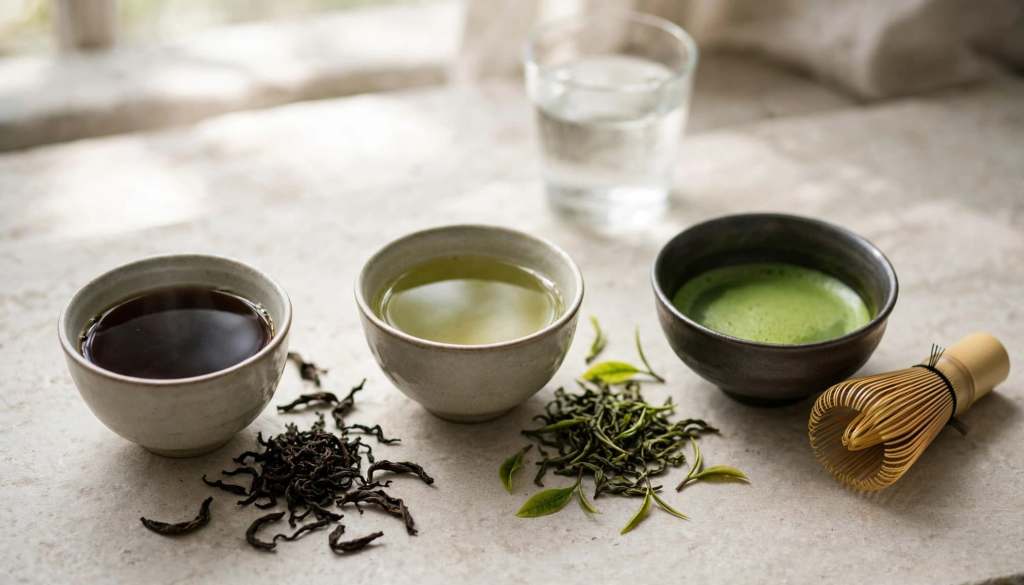
There are different levels of oxalate found in tea. It will depend on what type of tea it is, the product, and the preparation method.
A study from 2016 looked at certain teas and their oxalate levels when infused. On average, they found that there was about 224mg of oxalate in a 200ml cup of dark tea. There was also about 156mg in black tea and 80mg in green tea. Some teas had much more or less.
This is based on the products used in this study. There could be more or less depending on the tea you use. It could also vary depending on the size of your cup. Keep in mind that this study is looking at tea and the oxalate levels found in it, not if someone developed kidney stones.
| Tea or product | What the evidence says | What it does not show |
|---|---|---|
| Black tea | Tested samples contained measurable oxalate. Amounts differed by product. | That black tea causes stones in everyone. |
| Green tea | Tested samples also contained oxalate, with a lower average than the black and dark teas in one study. | That green tea prevents stones. |
| Matcha | The sources cited here do not provide a matcha-specific oxalate measurement or stone-risk estimate. | That matcha has the same oxalate level as brewed green tea, or that it prevents stones. |
| Herbal tea | Ingredients vary, so one oxalate estimate cannot describe every herbal blend. | That all herbal teas are low in oxalate or suitable for every stone former. |
| Tea extracts | Concentrated products are different from a cup of brewed tea. | That results from brewed-tea studies apply to extracts or supplements. |
So what this means is that we know that there are oxalates in tea, but we don’t know the probability of you developing a stone based on these values. It’s good to know there is variance in oxalate amounts in tea, but it should not be used as your chance of getting a stone.
Does matcha cause kidney stones?
There is no data that we can use to determine if matcha will give you kidney stones or prevent you from getting kidney stones. We can’t accurately estimate if you are at a higher or lower risk by using this research.
Matcha is created by taking green tea leaves and grinding them into a powder. So we can’t assume that if green tea has lower oxalates then matcha will also. When you consume matcha, you are consuming all of the leaves, not an infusion like most teas are consumed.
We also can’t say that matcha will help prevent you from getting kidney stones. There have been studies that showed that those who drink tea are less likely to get kidney stones, but we don’t know if those participants were drinking matcha.
In our article about matcha and weight loss, we go into more detail about the research behind matcha. But when it comes to kidney stones, there is not enough information to make any assumptions.
What matters more for preventing stones?
As previously mentioned, if you have had kidney stones in the past, you want to figure out why you got them. Everyone’s body is different, so there may be something specific to you that you can avoid.
Your doctor may look at what kind of stone you have had in the past. They may also do blood work and ask you to record what you eat for a period of time. They may also have you complete a 24-hour urine sample. This will allow your doctor to see what your body is overproducing or underproducing.
Drink enough fluid, unless you have been told to limit it
If your doctor hasn’t told you to limit your fluids, then you should make sure you are drinking plenty of fluids. According to the National Kidney Foundation, you may need to drink enough fluids to urinate at least 2 liters per day. Of course, this will vary based on your environment and how much you sweat.
You can drink water or any beverage that you like. Just keep in mind that you should follow your doctor’s advice if they have given you instructions on how much fluid to drink. If you have kidney failure or are on a fluid restriction, talk to your doctor before increasing your fluid intake.
Here is the NIDDK information on nutrition and kidney stones.

Do not cut calcium without medical advice
Some individuals believe if they have calcium stones, they should not get any calcium in their diet. This isn’t always true. Having adequate calcium intake from your diet may be beneficial if you form calcium oxalate stones. According to NIDDK, it may help decrease oxalate absorption when you eat calcium with your meals.
Adjust oxalate only if it fits your stone type and test results
You may want to decrease your oxalate if you form calcium oxalate stones and have lab values that reflect this. But having kidney stones does not mean you should limit all foods high in oxalate or tea.
If your doctor recommends you decrease your oxalate, ask them what foods/drinks to limit.
Pay attention to sodium and animal protein
According to NIDDK and the National Kidney Foundation, these may be something to keep in mind if you have kidney stones. How much you should limit will depend on the individual. Speak to your doctor or a registered dietitian to determine what’s best for you.
Should you stop drinking tea?
Maybe not. If you don’t have kidney stones and nothing is telling you to limit your oxalate or fluids, research doesn’t show that you should avoid tea.
If you’ve had a calcium oxalate kidney stone, speak to your doctor if tea is okay for you. Depending on your labs, you may be able to continue to drink tea. They may recommend you change your habits to prevent future stones.
If you do decide to drink tea, think about what else you’re consuming. Maybe you aren’t getting enough fluids, or you have a fluid restriction. Adding too much sugar or other things to your tea may also affect your health. We created this article on how to drink tea in a healthy manner.
Tea is different than a concentrated extract or pill. There are no studies to show that concentrated forms of tea will give you kidney stones.
Frequently Asked Questions
Does black tea cause kidney stones?
There’s no study to show that black tea gives you kidney stones. There are varying levels of oxalate in black tea, and just because a tea has oxalate in it doesn’t mean it’ll give you kidney stones.
Does matcha have more oxalate than brewed green tea?
From our sources, we weren’t able to find any that would compare matcha to green tea. Matcha is a powdered form of tea where you’re typically removing the leaves when you brew green tea. So these measurements wouldn’t apply to matcha.
Does adding milk to tea prevent kidney stones?
No studies have shown that putting milk in your tea will prevent you from getting kidney stones. Just because you should get calcium from your diet doesn’t mean if you have milk in your tea you’ll be protected from kidney stones.
Should I stop drinking tea if I have had kidney stones?
Not always. Consult your doctor if tea is something you should add to your diet. There are many factors to consider when you have kidney stones.
I feel that there is no right answer to if you should stop drinking tea if you have kidney stones. As mentioned above, know your type of stone and get tested to see if that’s something you should worry about. Drink tea in moderation and know that it won’t cure you of kidney stones.
The bottom line
Just because tea has oxalate in it doesn’t mean that drinking tea will give you kidney stones. Some studies have found that those who drink tea have lower rates of kidney stones, but again, these studies are observational. So we can’t say that tea will prevent you from getting kidney stones.
There is no information from our sources that state that matcha will give you kidney stones or will protect you from them. If you have a history of kidney stones, consult your doctor on what you should and shouldn’t be consuming.

Sources
- NIDDK: Eating, Diet, and Nutrition for Kidney Stones
- National Kidney Foundation: Kidney Stones Diet and Prevention
- Dai and Pearle, “Diet and Stone Disease in 2022”
- Xu et al., “Self-Fluid Management in Prevention of Kidney Stones”
- Brzezicha-Cirocka et al., “Oxalate, magnesium and calcium content in selected kinds of tea”

